Discover how contemporary automotive fine art on metal elevates luxury garages and private collections. Large-scale textural works for discerning collectors.
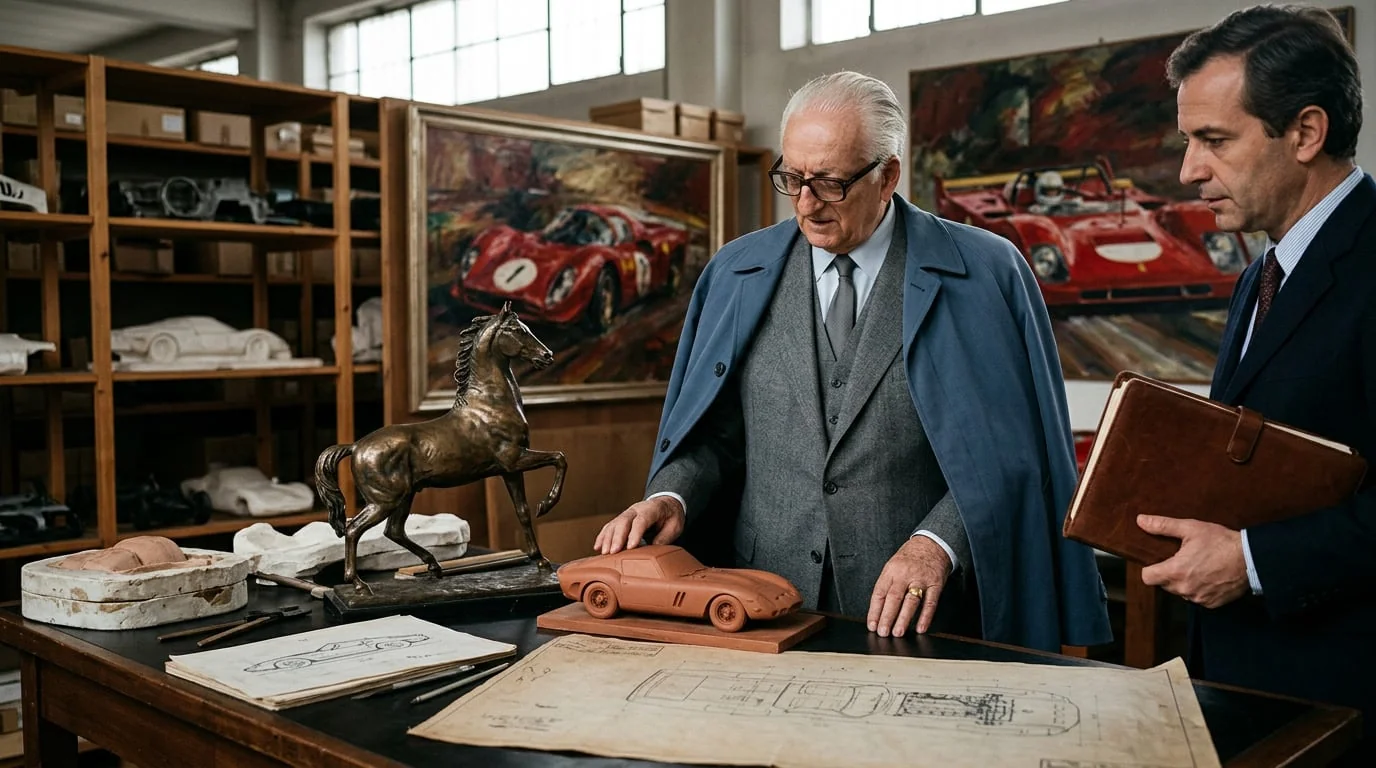
Speed as a Visual Language
There is a moment at Le Mans, just before dawn, when a prototype car streaks past the grandstands and leaves behind nothing but light, sound, and a visceral emotional residue. That feeling, raw and almost impossible to articulate, is precisely what the best contemporary automotive fine art attempts to translate onto canvas, metal, and board. It is not documentation. It is not illustration. It is the distillation of kinetic experience into a permanent, physical object that can live on a wall and continue to radiate that energy for decades.
For serious collectors, automotive art has evolved far beyond illustration or portraiture of machines. The most coveted works today exist in the same conversation as abstract expressionism, occupying a space where Franz Kline's slashing black forms and Joan Mitchell's kinetic energy meet the roar of a naturally aspirated V12. The emotional register is identical: urgency, precision, controlled violence, and an almost unbearable beauty. The finest contemporary automotive fine art for collectors operates at exactly this level, where the subject matter is a vehicle for something far larger than itself.
"The greatest automotive art does not paint a car. It paints what a car makes you feel."
What Separates Fine Art from Decoration
This distinction matters enormously to the discerning collector. Decorative car prints are abundant, affordable, and forgettable. Original, large-scale works that carry genuine artistic intention, physical texture, and investment-grade provenance are extraordinarily rare. The difference is not merely aesthetic; it is philosophical. One object is manufactured. The other is made, shaped by a singular human intelligence working through a specific creative problem with irreplaceable materials and irreplicable decisions.
The collector community has taken note. At Pebble Beach Concours d'Elegance, where the world's most significant automobiles gather each August on the 18th fairway of Cypress Point, the accompanying fine art exhibitions have grown increasingly sophisticated. Collectors who arrive with eight-figure budgets for automobiles are applying the same critical eye to the art that will live alongside those machines. They are asking the same questions they ask of a coachbuilt Touring Superleggera body: Is this resolved? Is this intentional? Does this justify its own existence?
Enzo Ferrari himself famously understood this duality. He commissioned artists and sculptors throughout his life, believing that the emotional architecture of a great car and a great artwork were fundamentally the same pursuit: the obsessive refinement of beauty under constraint. That philosophy has never been more relevant. Today's most sophisticated collectors are not simply buying images of cars. They are acquiring objects that embody the same values they admire in the machines themselves: mastery, rarity, and an uncompromising commitment to the highest possible standard of execution.
The Case for Texture and Metal
One of the most compelling developments in contemporary automotive art is the move toward highly textural surfaces and works executed directly on metal substrates. There is an obvious and deeply satisfying material logic here: the subject matter is metal in motion, so the medium answers the subject. The conversation between material and meaning is not incidental; it is the point. When heavy impasto pigment is built up in layers over an aluminum or steel ground, the resulting object carries a physical weight and presence that print-on-paper can never approximate.
Works built with heavy impasto techniques, layered pigment, and dimensional surface relief do something that a flat print categorically cannot. They catch light differently at every hour of the day, shifting in character the way a hand-polished hood panel shifts under changing sun. At noon, the ridges of pigment cast hard shadows. By late afternoon, those same ridges glow with warm lateral light. In a well-designed luxury garage or a collector's private gallery, this quality is irreplaceable. The work is never the same twice, which means the relationship between collector and artwork deepens rather than stagnates over time.
Gabrielle Benot's signature Guscio technique represents one of the most distinctive approaches to this challenge in contemporary fine art. The method builds dimensional, shell-like surface architecture directly into the work, creating a topography of pigment that interacts with light in ways that are genuinely unpredictable and endlessly rewarding. For collectors who understand that a great painting is also a great object, this approach is immediately and viscerally compelling. You can explore the full range of large-scale textural automotive works in the Speed Collection, where each piece translates racing culture into a unified statement of composition, color, and physical presence.
According to Architectural Digest, the integration of serious original art into residential garages and car storage spaces has become one of the defining interior design trends among ultra-high-net-worth clients globally. Leading designers are now treating the collector's garage as a fully realized interior environment, one that deserves the same curatorial attention as a formal living room or a private museum wing.

Color as a Collector's Criterion
Texture alone does not make a great work. Color is equally decisive, and it is where many artists working in the automotive genre fall short. Racing liveries, carbon fiber, and polished metal are visually demanding subjects. They require a palette that can hold its own against that visual complexity without either disappearing into it or overwhelming it.
The most successful contemporary automotive fine art for luxury interiors achieves a rare harmonic balance: colors that feel inevitable rather than chosen, combinations that reward sustained looking rather than delivering their entire effect in the first three seconds. This is the difference between a palette that impresses and a palette that endures. Collectors and interior designers working with investment-grade contemporary art consistently identify color mastery as one of the primary markers of long-term value, alongside provenance, scale, and material quality.
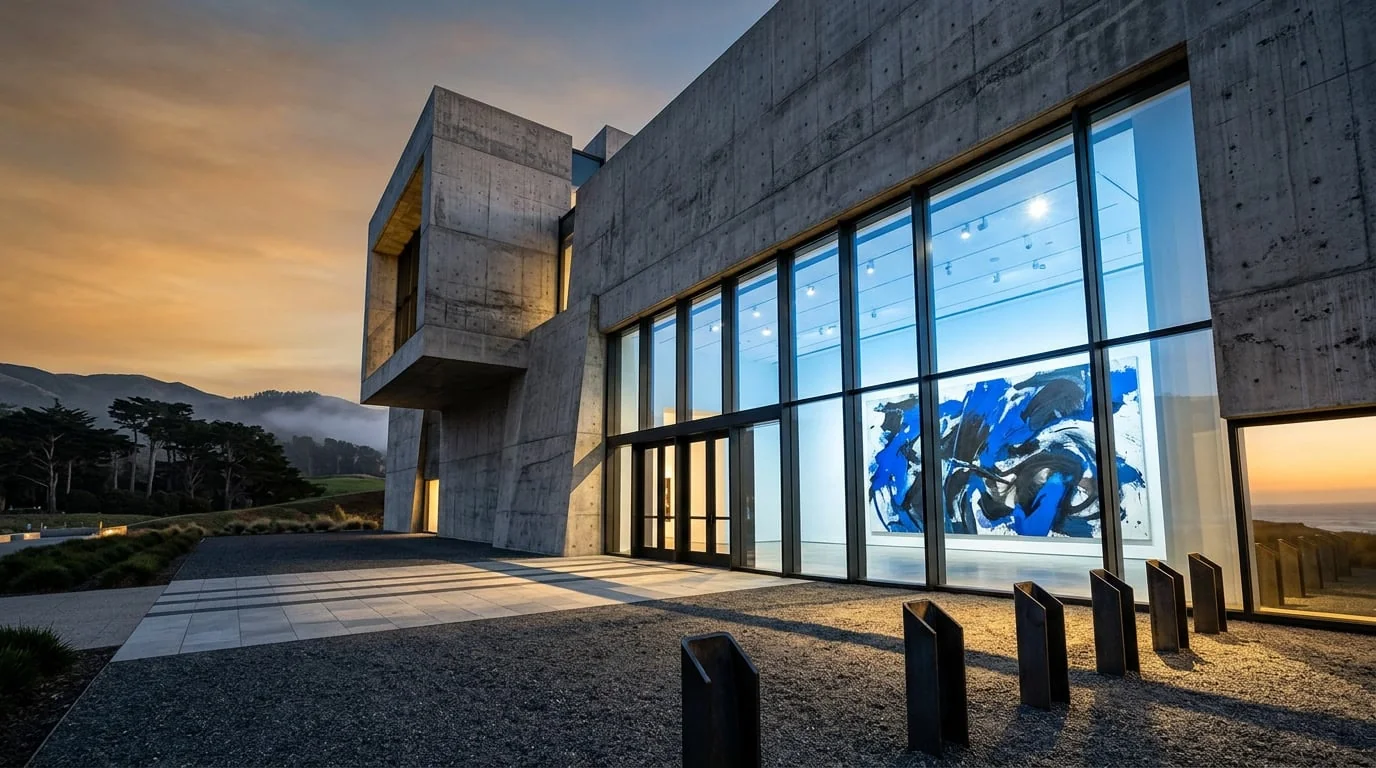
Benot's color sensibility draws on the same instinct that guided the great colorists of the twentieth century: the understanding that harmony is not sameness, and that the most beautiful combinations are often the most surprising ones. Her automotive works carry palettes that feel simultaneously bold and resolved, energetic and controlled, which is precisely the emotional register that makes them so well suited to the environments where serious car collectors live and work.
Choosing the Right Scale
Scale is everything. A luxury garage with 14-foot ceilings and polished concrete floors demands art that commands the room, not apologizes for being in it. Works in the 48-by-60-inch range and above read as architectural statements rather than afterthoughts. The proportion of art to wall space should feel deliberate and generous, calibrated to the volume of the room the way a great chef calibrates seasoning: present enough to define the experience, restrained enough to never overwhelm it.
For collectors working with interior designers on bespoke garage environments, the conversation about scale should happen early and in parallel with decisions about lighting. A large-format textural work on metal requires directional lighting to reveal its full character. Recessed adjustable fixtures positioned at a low angle to the wall surface will animate the impasto relief in ways that flat, diffuse lighting simply cannot. The art and the architecture should be planned together, not retrofitted against each other.
The Speed Collection was conceived with exactly this spatial intelligence in mind. These large-format works on metal and board translate the abstracted energy of racing culture, from the tight chicanes of Monaco to the long straights of Monza, into pieces that hold their own against extraordinary machines and extraordinary architecture simultaneously. They do not compete with the cars in the room. They complete the room.
Collectors interested in works that carry the same physical authority in non-garage settings will find that the Abstracts Collection offers large-scale textural works with the same commanding presence and investment-grade quality, calibrated for boardrooms, private offices, and formal living spaces where the subject of speed translates into pure visual energy.
A Collector's FAQ
- What size art works best in a luxury garage? Aim for pieces no smaller than 40 by 50 inches. For double or triple-bay garages, consider diptychs or works exceeding 60 inches in any dimension. The goal is presence, not decoration.
- Is automotive fine art a sound investment? Original works by established contemporary artists with documented exhibition history and limited output have consistently appreciated. Prints and reproductions do not carry the same value trajectory. Provenance, material quality, and the artist's cohesive body of work are the primary drivers of long-term value.
- What makes a work "museum quality"? Archival materials, professional documentation, certificates of authenticity, and a cohesive body of work from the artist are the primary markers collectors and institutions use. Works executed on archival metal substrates with professional-grade pigments carry an additional material longevity that paper-based works cannot match.
- Can automotive art work outside a garage? Absolutely. The finest pieces translate powerfully into living rooms, boardrooms, and private offices. The subject matter reads as energy and movement, not merely as cars. A great automotive fine art work is, at its core, a great painting. The subject is the entry point; the art is what remains.
- How do I commission a custom automotive work? The most meaningful commissions begin with a conversation about the specific car, race, or emotional memory the collector wants to preserve. A skilled artist working at this level will translate that brief into a work that exceeds the literal and arrives at the essential. Visit the shop to explore available works or inquire about bespoke commissions.