Human mathematics is built on ten fingers, not mathematical necessity. What if we had evolved differently, and what would numbers look like then?
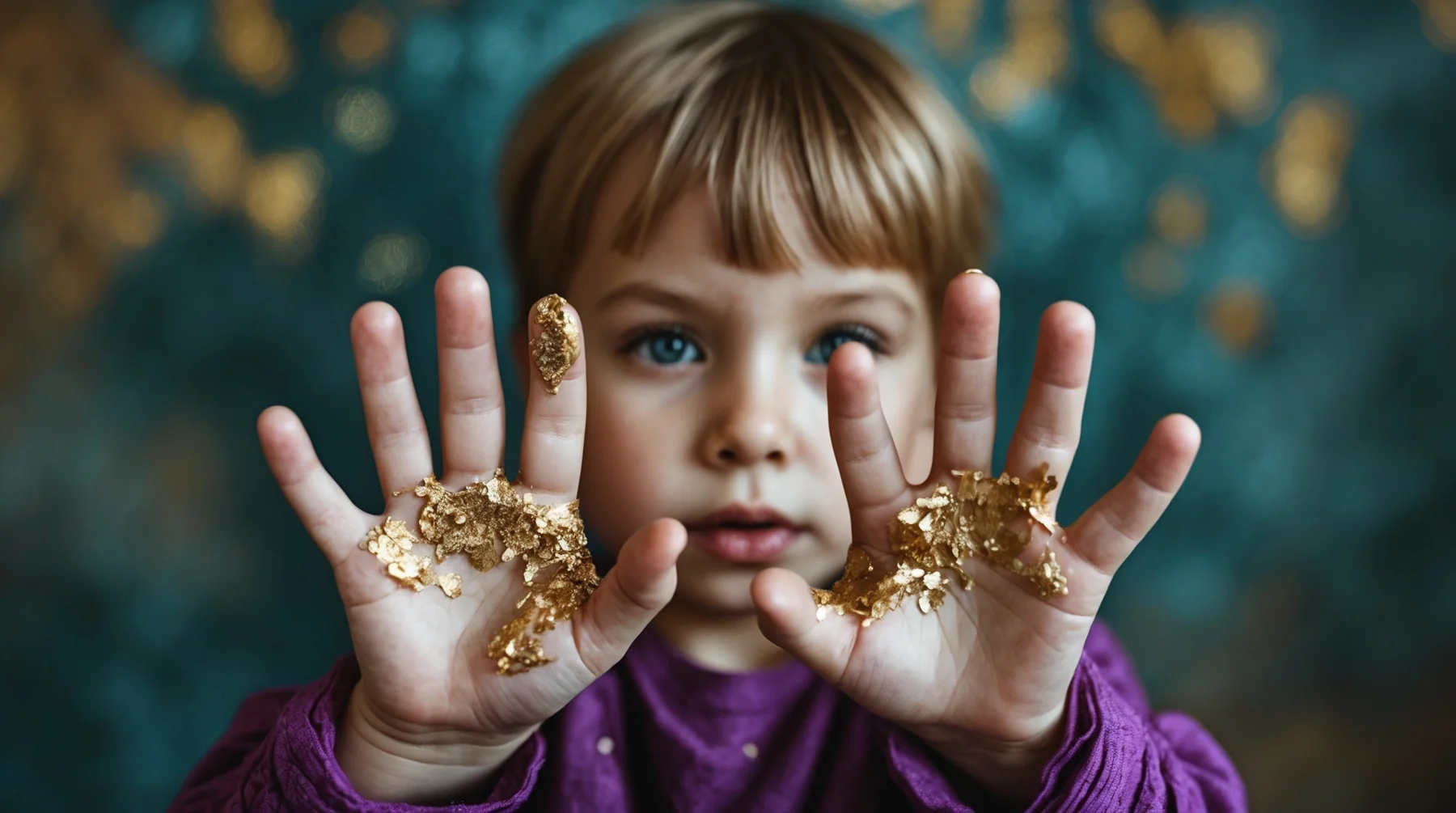
There is a moment most children pass through, usually somewhere around age four or five, when they discover that their hands are a calculator. They hold up fingers to count, fold them down one by one, and arrive at a number with a kind of physical satisfaction that no abstract symbol can quite replicate. It feels natural, obvious, almost pre-rational. And that, precisely, is the problem with taking it for granted.
The decimal system, the one that organizes virtually all modern mathematics, commerce, science and measurement, is built on the number ten. Ten ones make a ten. Ten tens make a hundred. Fractions are expressed as tenths and hundredths. The entire scaffolding of how we write, manipulate and reason about quantity rests on this single number. And that number was not chosen by mathematicians. It was handed to us, quite literally, by evolution.
The Anatomy of Arithmetic
The connection between fingers and counting is so old and so widespread that linguists have traced it across language families on every inhabited continent. In many languages, the word for five and the word for hand share a common root. In others, the word for ten and the word for both hands are the same or closely related. This is not coincidence, and it is not metaphor. It is a record of how human beings first made numbers concrete.
Before written numerals, before clay tablets, before any symbolic system, the body was the counting device. Fingers are discrete, visible, easy to point at, and naturally grouped into sets of five and ten. They are, in the language of mathematics, a ready-made base. When early human communities needed to communicate quantity, the hand offered an immediate, portable, universally shared reference. You did not need to agree on a symbol for five. You held up a hand.
This is the origin of base ten, and it has nothing to do with ten being a particularly elegant or efficient number for mathematics. It has everything to do with the fact that the hominid line happened to develop pentadactyl limbs: five digits per hand, two hands, ten fingers total. Had our ancestors evolved with four fingers per hand, as many early depictions of cartoon characters inadvertently suggest, base eight would likely feel just as natural and inevitable as base ten does now.
What Other Bases Reveal
The idea that ten is arbitrary becomes much easier to see once you look at the number systems that did not use it, or that used it only partially.
The Babylonians worked in base sixty, a system whose influence persists today in the sixty seconds of a minute, the sixty minutes of an hour, and the three hundred and sixty degrees of a circle. Base sixty was likely chosen because sixty divides cleanly by two, three, four, five, six, ten, twelve, fifteen, twenty and thirty, making it extraordinarily practical for calculation and trade. Mathematically, sixty is far more divisible than ten, which divides cleanly only by two and five. If pure mathematical elegance had determined our number system, we might all be counting in sixties.
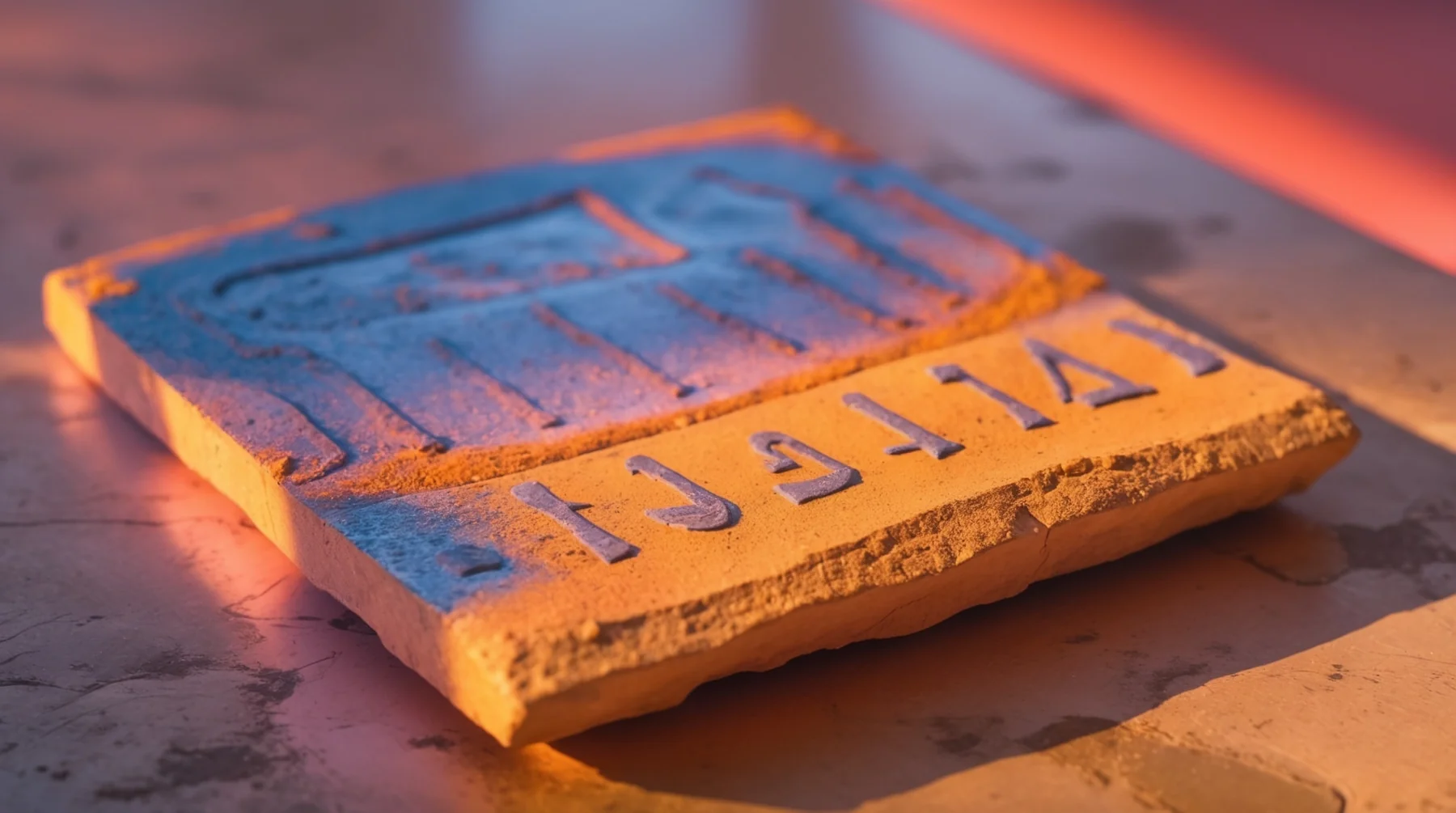
The Maya developed a base twenty system. Twenty, of course, is the number of fingers and toes combined, which suggests that their counting practice may have involved the feet as well as the hands, or that the body as a whole served as the counting instrument. The Maya calendar and astronomical calculations achieved remarkable precision within this system, demonstrating that base twenty is not a curiosity but a fully functional mathematical architecture.
Closer to home, base twelve has had persistent advocates throughout history. Twelve divides by two, three, four and six, making mental arithmetic with fractions considerably easier than base ten allows. Remnants of duodecimal thinking survive in the twelve inches of a foot, the twelve items in a dozen, and the way many traditional measurements were structured. Some mathematicians and reformers have argued for base twelve on purely practical grounds, and the mathematics supports them. But base ten is so deeply embedded in human cognition and infrastructure that such arguments remain theoretical exercises.
Computers, meanwhile, operate in base two: ones and zeros, on and off, the binary logic of electronic switches. When engineers need a more compact notation, they often use base sixteen, hexadecimal, which groups binary digits into sets of four. Neither base two nor base sixteen has any relationship to the human hand. They were chosen for the architecture of machines, not the anatomy of their makers. And they work perfectly well.
Ten is not a mathematical truth. It is an anatomical one, and the difference matters more than we usually stop to consider.
The Cognitive Residue
What makes this more than a historical footnote is the way finger-counting shapes not just how we write numbers, but how we think about them. Research in developmental psychology and cognitive science suggests that the relationship between fingers and numerical cognition runs deeper than early childhood habit. Children who are encouraged to use their fingers while learning arithmetic often develop stronger number sense than those who are discouraged from it, and some researchers have proposed that finger representation is neurologically linked to numerical processing in ways that persist into adult cognition.
I find this genuinely striking. The idea that the body does not merely help us learn mathematics but may actually be part of how we represent number internally, that counting is not purely abstract even in a trained adult mind, suggests that the finger-based origin of base ten is not just cultural history. It may be written into the architecture of numerical thought itself.
This connects to a broader idea in cognitive science sometimes called embodied cognition: the proposal that abstract thinking is not as separate from physical experience as we tend to assume. We speak of grasping an idea, of things adding up, of something not computing. Language is full of these bodily metaphors for thought, and mathematics may be no exception. The decimal system is not just a convention we inherited; it may be a convention that shaped the neural pathways through which most of us process quantity.
The Cultures That Counted Differently
Some counting traditions used fingers in ways that produced different bases, and they are worth pausing on because they make the contingency of our own system visible.
Several cultures developed systems of counting the segments of fingers rather than the fingers themselves. The human hand has three segments on each of the four non-thumb fingers, giving twelve countable segments on one hand, with the thumb available as a pointer or marker. This produces a base twelve system from the same ten-fingered anatomy that elsewhere produced base ten. The choice of what to count on the hand, whole fingers or finger segments, is itself a cultural decision, and it leads to entirely different numerical architectures.
In parts of Papua New Guinea, anthropologists have documented counting systems that extend well beyond the hands to include wrists, elbows, shoulders and other body parts, producing bases that have no relationship to ten or five at all. These systems are not primitive approximations of the decimal; they are coherent numerical frameworks built from a different set of physical anchors. They reveal, more clearly than almost anything else, that the choice of base is a choice, even when it feels like a discovery.
What We Lose by Forgetting This
None of this is to suggest that base ten should be abandoned, or that the mathematics built on it is somehow compromised. The decimal system is a magnificent tool, and the science, engineering and commerce it has enabled are real. The point is something quieter and, I think, more interesting.
When we treat base ten as self-evident, we stop asking why mathematics looks the way it does. We mistake a contingent historical outcome for a necessary truth. And that confusion has consequences, not practical ones, but philosophical ones. It encourages the belief that mathematics is something discovered rather than something partly constructed, that number systems are found in the world rather than built by minds working with the materials at hand, which is to say, quite literally, the hands.
There is something worth sitting with in the image of a child holding up ten fingers and arriving at ten as the organizing principle of all subsequent arithmetic. That child is not glimpsing a mathematical absolute. They are inheriting a very long chain of human decisions, each one made by someone who also started by looking at their hands and thinking: this many. This is how many we have. Let us begin here.
The architecture of mathematics did not descend from some abstract realm of pure form. It grew up from the body, from the particular shape of a primate hand, from the practical need to communicate quantity before anyone had invented a symbol for it. That origin does not make mathematics less remarkable. If anything, it makes it more so: a system of extraordinary power and precision, built on the most ordinary foundation imaginable.