Discover how medieval French embroidery from the Abbey of Cluny to Chanel's ateliers shaped modern luxury textile art and contemporary fine art practice. A sophisticated editorial on texture, craft, and artistic legacy.
The Thread That Never Broke
Somewhere in the 11th century, in the candlelit scriptoriums and workshops surrounding the Abbey of Cluny in Burgundy, artisans began doing something radical. They stopped treating fabric as a background and started treating it as a landscape. Gold thread was couched in spiraling formations. Silk was layered until it held light like stained glass. The surface itself became the subject.
This was not mere craft. This was the first serious conversation in Western art about texture as meaning.
The Opus Anglicanum tradition, which flourished across medieval France and England, elevated embroidery to a status rivaling panel painting. Popes commissioned it. Kings wore it into battle. The Metropolitan Museum of Art holds surviving fragments that still arrest the breath, centuries later, because of the sheer audacity of their surface complexity.
"The most profound luxury is not what is immediately seen, but what is slowly felt beneath the fingertips and behind the eyes."
Chanel and the Alchemy of the Atelier
Fast-forward to 1924, when Gabrielle Chanel, in a move that shocked the Parisian fashion establishment, began collaborating with embroidery houses that traced their lineage directly to these medieval textile traditions. She understood intuitively what the monks of Cluny had understood: that surface tension is emotional tension. That the way light catches a raised thread or a layered textile tells a story no flat canvas ever could.
The house of Lesage, founded in Paris and later absorbed into the Chanel constellation, became the custodian of this living tradition. Karl Lagerfeld famously described Lesage embroideries as "painting with thread," a phrase that collapses the boundary between fine art and applied craft entirely.
Picasso, who was deeply embedded in the Parisian avant-garde of the same era, was equally obsessed with surface relief. His collages and constructed sculptures were a parallel conversation: what happens when you build an image rather than draw it?
Texture as the New Painting
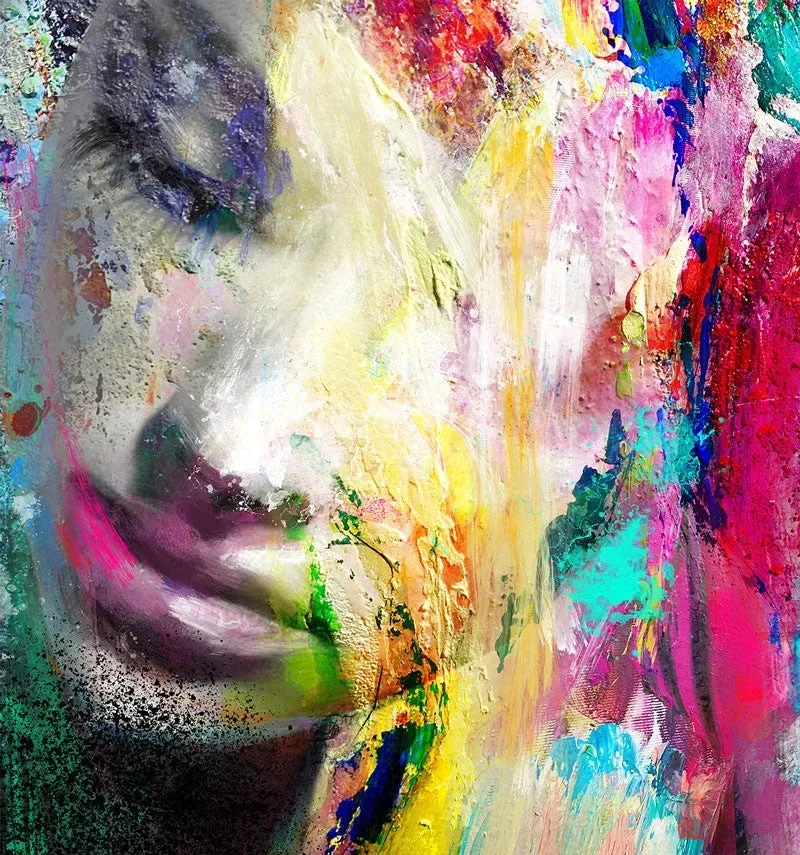
The contemporary fine art world has arrived, decisively, at the same conclusion those medieval embroiderers reached a thousand years ago. Collectors and interior architects now seek works where the surface is dimensional, where the art changes character depending on the hour of day and the angle of light. It is why impasto painting, raised metallic works, and tactile mixed-media pieces command the kind of attention and price points once reserved exclusively for Old Masters.
This is precisely the territory explored in the Experimental Collection, where the signature Guscio technique creates surfaces that behave more like topography than paint. Like the couched goldwork of a Cluny vestment, each layer is deliberate, each ridge of texture a conscious compositional decision that rewards prolonged looking.
Why Collectors Are Drawn to Textural Art Now
- Emotional depth: Dimensional surfaces create a psychological sense of intimacy and presence that flat prints cannot replicate.
- Light responsiveness: Textural works shift and breathe with natural and artificial light, making them living elements of a space.
- Rarity: Highly textural original works are, by nature, unrepeatable. Each is a singular object, not a reproducible image.
- Investment value: As seen across major fairs including Art Basel, tactile and mixed-media originals consistently attract serious collector interest and long-term value appreciation.
The thread from Cluny to the contemporary gallery wall is unbroken. It simply changed hands, changed materials, and grew bolder with each century. For those who understand the history, acquiring a deeply textural original work is not merely an aesthetic choice. It is participation in one of the oldest and most sophisticated conversations in Western art.