Why the act of making art heals differently than viewing it, and how creative process rewires emotional processing and self-perception.
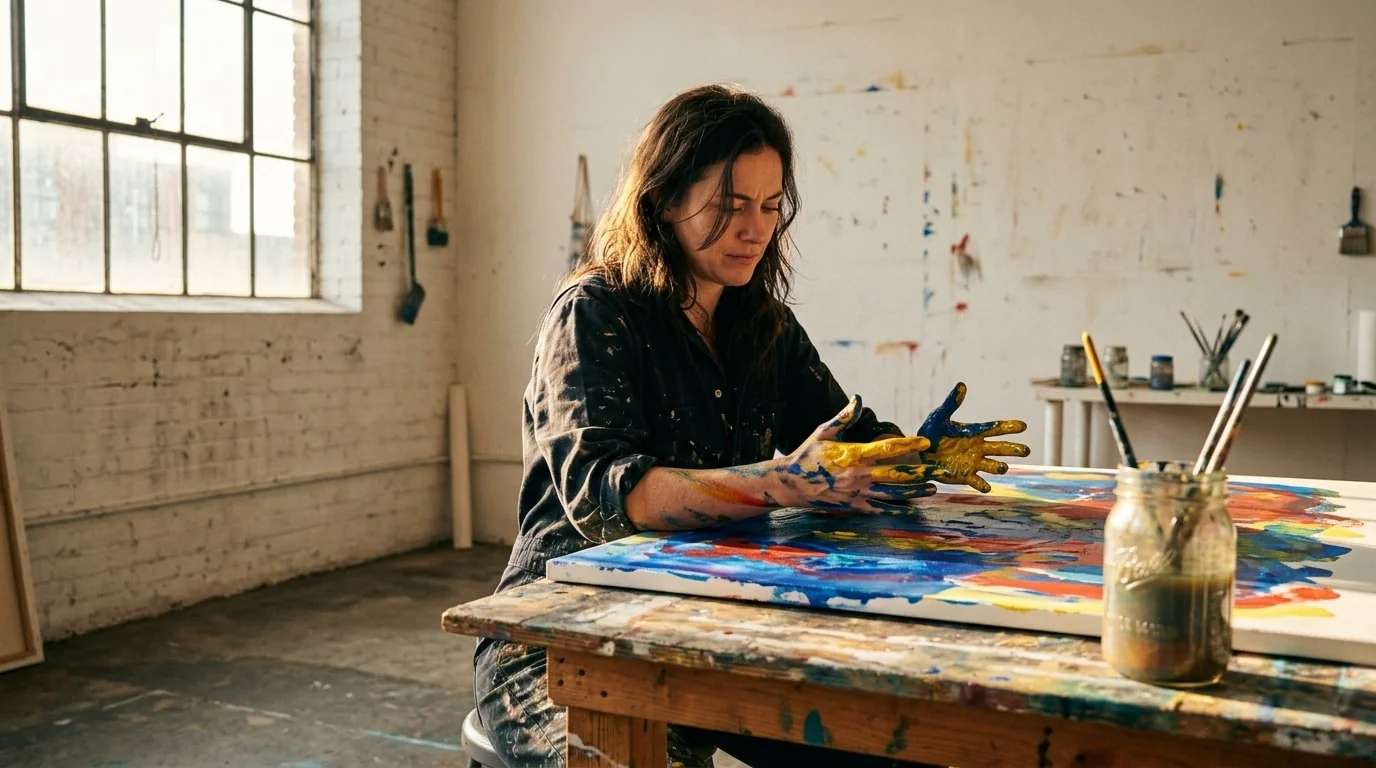
There is a distinction worth making carefully, because it is easy to collapse. Viewing a painting can be a profound experience. It can interrupt grief, shift a mood, or open a door in the mind that had been stuck. But the person who made that painting underwent something different in kind, not just in degree. The act of making is not an intensified version of the act of looking. It is a separate psychological event, with its own mechanisms, its own demands, and its own particular form of repair.
Understanding why requires stepping back from the finished object entirely and attending to the process that produced it.
What Does Making Do That Viewing Cannot?
When you view art, you are a receiver. Your nervous system responds to what is already there: colour, form, scale, surface, the accumulated choices of another person. That responsiveness is real and it matters. But the viewer's role is fundamentally passive in one crucial sense: the work does not require anything from you in return. You can leave.
The maker cannot leave. The act of creation demands continuous decision-making under conditions of uncertainty. What goes here. Whether this is finished. Whether the mark just made was right or wrong, and what to do with it now. This sustained engagement with an open problem is not incidental to the healing properties of making; it is central to them.
Research in this area suggests that states of absorbed, purposeful attention, the kind that making art reliably produces, are associated with reduced activity in the brain's default mode network. That network is closely linked to rumination, self-referential worry, and the cycling of distressing thought. Making something, especially something that requires genuine concentration, interrupts that cycle not by suppressing it but by genuinely displacing it. The mind cannot fully occupy two states at once.
How Does Giving Form to Feeling Change It?
One of the most psychologically significant things the act of making does is give internal experience a location outside the self. This sounds simple, and the mechanism is not fully settled in the literature, but the effect is consistently reported by makers across traditions, cultures, and centuries: the thing that was inside is now, in some sense, out there.
This externalisation matters for several reasons. First, what has been given form can be looked at, and what can be looked at can be related to differently. An emotion that exists only as a pressure inside the body has no edges; it fills the available space. An emotion that has been translated into colour, gesture, texture, or line has become something with a boundary. It can be regarded from a slight distance. This is not the same as suppressing the feeling. It is closer to the opposite: the feeling has been taken seriously enough to be given shape.
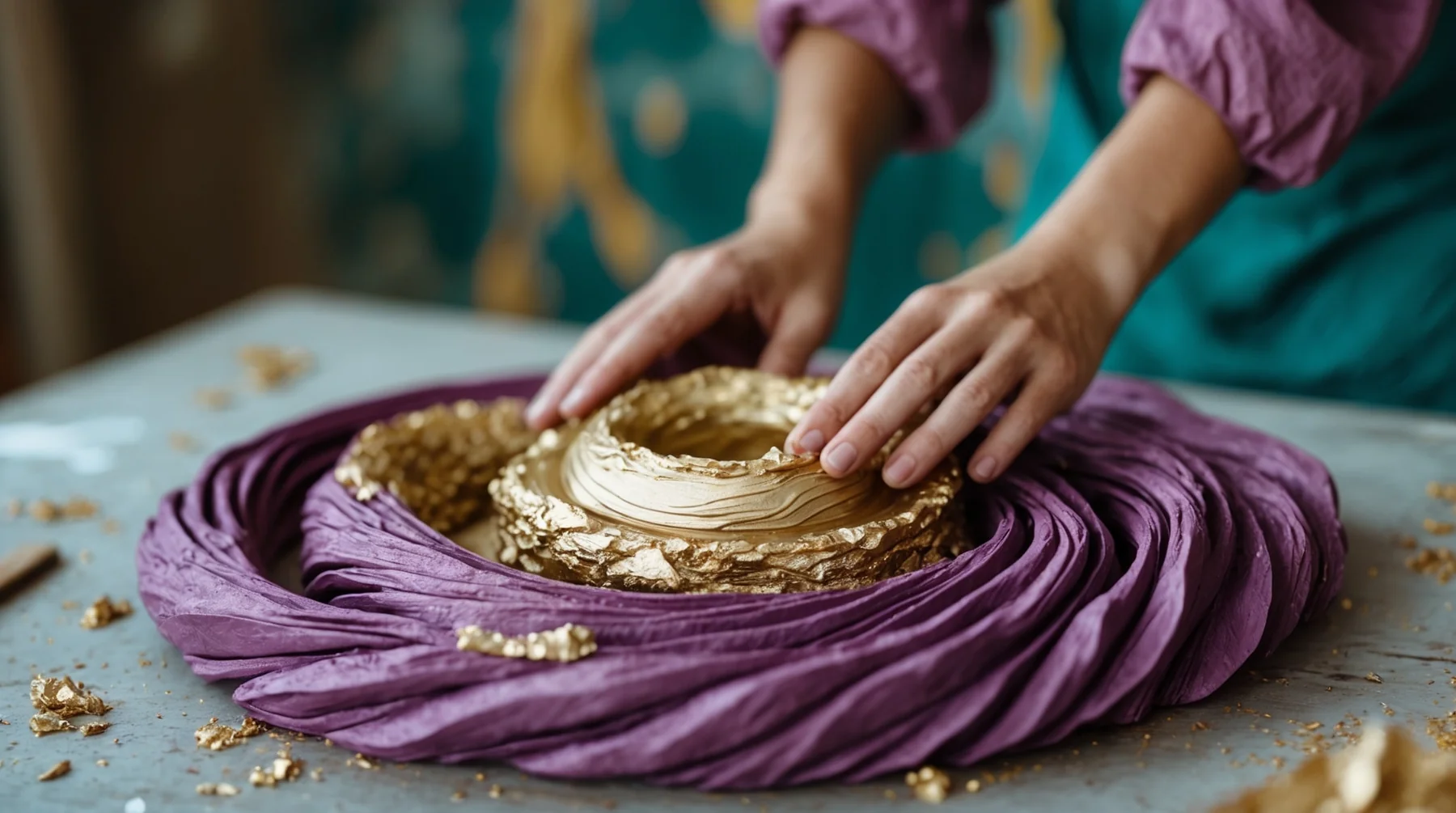
Second, the act of translation itself is transformative. Moving from felt experience to made form requires choices, and choices require agency. The person who felt powerless in the face of grief or fear is, in the act of making, exercising authorship. That shift in position, from patient to agent, is one of the more durable changes that creative practice can produce.
The person who felt powerless in the face of grief or fear is, in the act of making, exercising authorship.
Why Is Imperfection Part of the Medicine?
There is a particular feature of making that has no real equivalent in viewing, and it deserves its own attention: the encounter with failure.
Every maker works with materials that resist. Paint moves unexpectedly. Texture builds wrong. A mark lands in the wrong place. The gap between what was intended and what appeared is not a malfunction of the creative process; it is the process. And learning to stay present with that gap, to respond to it rather than abandon the work, is a form of psychological training that extends well beyond the studio.
What making teaches, over time and through repetition, is a particular relationship to imperfection: not acceptance in the passive sense, but engagement. The mark that went wrong becomes the starting point for the next decision. This is not a metaphor applied to making from outside; it is the literal structure of how creative work proceeds. And for people carrying experiences of shame, perfectionism, or the conviction that mistakes are catastrophic, that structure can be genuinely corrective.
When Mistakes Become the Work
The studio is one of the few environments where imperfection is not only tolerated but often generative. Mistakes in creative work regularly produce the most interesting outcomes. That is not a comfortable truth for a mind trained to avoid error at all costs, and the discomfort of sitting with it, repeatedly, in low-stakes conditions, can gradually reshape the way error is processed elsewhere in life.
Does Making Change How We See Ourselves?
The relationship between making and self-perception runs in both directions.
On one side: the act of making something that did not previously exist is an encounter with one's own capacity. For people who have internalised a story of inadequacy or limitation, completing a creative work, however modest, is evidence that contradicts that story. The object exists. It was not there before. It came from somewhere inside the maker. That is not nothing.
On the other side, the work reflects the maker back in ways that are sometimes uncomfortable and sometimes clarifying. Artists frequently report discovering something through making that they did not know they felt. The hand, moving through the process, sometimes knows before the conscious mind does. This is not mysticism; it is a description of how non-verbal processing works. The body holds knowledge that language has not yet organised, and making art is one of the few activities that gives that knowledge a route out.
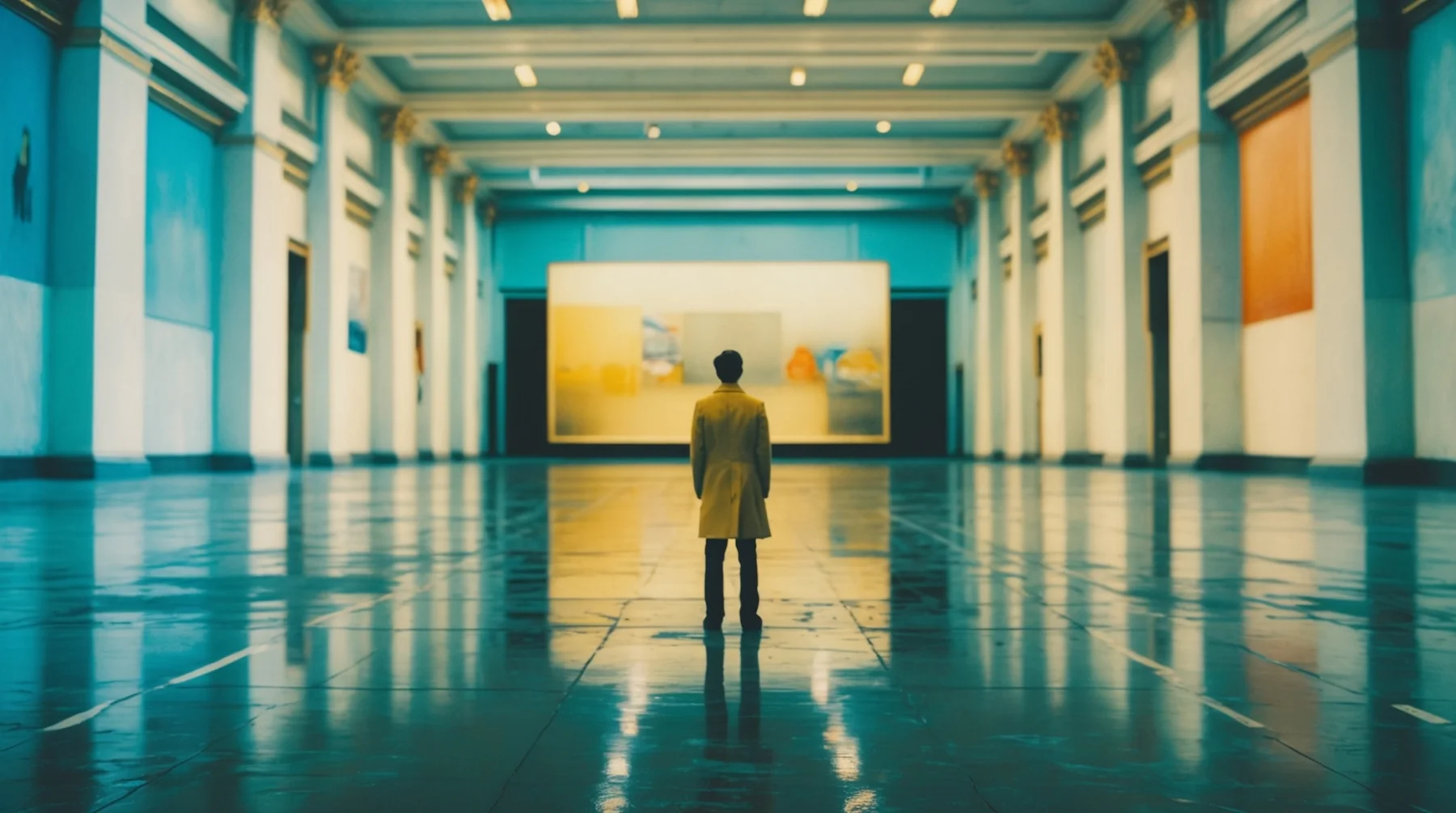
What emerges from that route is not always pleasant. But it is almost always useful. The emotion or memory or conflict that has been circling below the surface, once it has been given form, can be engaged with directly. It has become, in the most literal sense, something the maker can work with.
Repetition, Ritual, and the Long Game
A single session of making can shift a mood or interrupt a difficult moment. But the deeper psychological effects of creative practice accumulate over time, and this is worth naming clearly, because it changes what we should expect from making as a form of care.
Regular creative practice builds a different relationship to the interior life. The maker who returns to the studio or the desk or the workbench repeatedly develops a habit of externalisation, a practiced ability to move feeling into form. That habit does not make difficult emotions disappear. It makes them more navigable, because the maker has, over time, developed confidence that something can be done with them.
The Studio as a Different Kind of Space
There is also something in the ritual dimension of making that deserves acknowledgment. The preparation of materials, the physical arrangement of the workspace, the particular gestures that begin a session: these are not merely practical. They are transitional acts that signal to the nervous system a change in mode. Regular makers often describe the studio as a different kind of space, one with different rules, different permissions, different relationships to time. That difference is not accidental. It is constructed, through repetition, by the practice itself.
The Guscio methodology is one example of how a structured, repeatable process can carry that ritual weight: the sequence of material decisions, the building of surface over time, the return to the same questions in each new work.
Does It Matter Whether You Are Talented?
None of this requires that the maker be talented, trained, or producing work for anyone else's eyes. The psychological mechanisms described here do not depend on aesthetic quality. They depend on genuine engagement with the process: the sustained attention, the decision-making under uncertainty, the encounter with resistance, the act of externalising internal experience into form.
This is why art therapy, in its clinical forms, does not ask participants to make beautiful things. It asks them to make things. The distinction matters. The moment making becomes performance, aimed at a viewer's approval, the maker has partly re-entered the viewer's position, judging the work from outside rather than living inside the process. The healing properties of making are most available when the maker is genuinely absorbed in the act rather than monitoring its reception.
For those who do make seriously, and who make repeatedly, the studio becomes something that is difficult to name without sounding imprecise: a place where the self is both expressed and revised. The work that comes out of it is one thing. What the maker becomes through the practice of making it is another, and in the long run, perhaps the more significant one.