Discover how large-scale contemporary abstract art transforms minimalist luxury interiors.
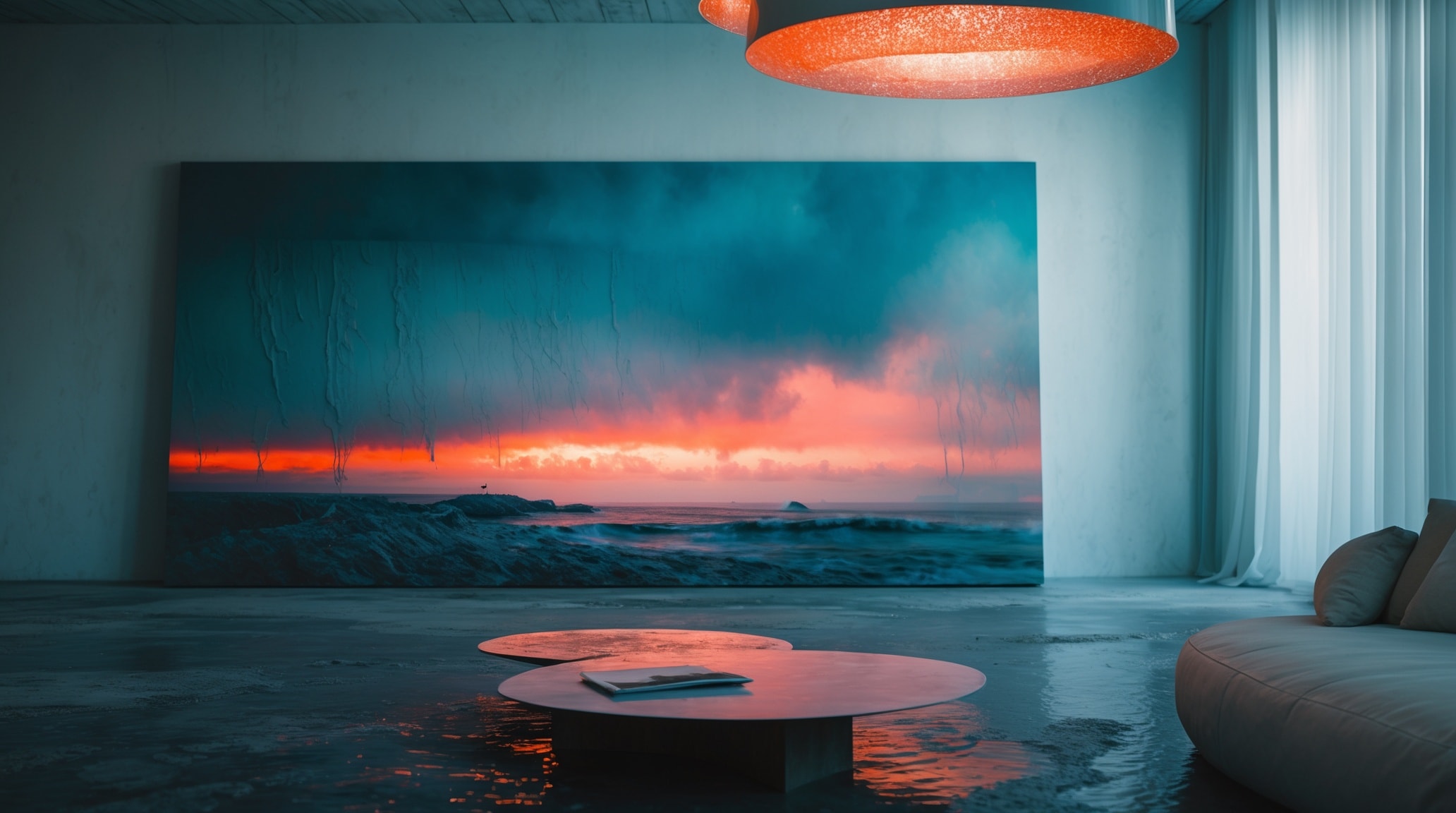
There is a moment that every serious interior designer knows intimately: the moment a room, stripped of excess, stripped of noise, suddenly demands something extraordinary to anchor it. In the world of minimalist luxury design, where restraint is the highest form of sophistication, large-scale contemporary abstract art is not decoration. It is architecture. It is the visual and emotional spine of a space that has been deliberately emptied to make room for one singular, breathtaking statement.
Why Scale Is Non-Negotiable in Luxury Interiors
The psychology of scale in interior design is well-documented. A work that is too small for a wall does not merely look modest; it looks uncertain, apologetic. The world's most celebrated interior designers, from Kelly Wearstler to Axel Vervoordt, have long understood that in a minimalist space, the art must be proportionally bold. A large-scale abstract work does not compete with the architecture; it completes it, giving the eye a destination and the room a sense of intentional grandeur.
Interior design editors at Architectural Digest consistently feature residences where a single oversized abstract canvas transforms an otherwise spare room into a gallery-worthy environment. The rule of thumb most designers follow: art should occupy between 60 and 75 percent of the available wall width to feel genuinely anchored rather than incidental.
Texture as the Language of Luxury

In a minimalist interior, surface quality becomes everything. When walls are white, furniture is spare, and ornament is eliminated, the eye hungers for tactile richness. This is precisely where heavily textured abstract art, particularly work executed in the tradition of rich impasto, earns its place among the most coveted design investments. The physical dimensionality of the surface catches light differently at every hour of the day, making the work feel alive in a way that a flat print or a photograph simply cannot.
Artists like Mark Rothko and Joan Mitchell understood that a painting is not merely a visual object but a physical presence in a room. Contemporary collectors who have experienced truly textural abstract work describe the same phenomenon: the piece changes as the light changes, and the space around it changes with it. It is a living element of the interior, not a static one.
"In a room that has been deliberately emptied, a single work of large-scale abstract art does not fill the silence. It gives the silence meaning."
Color Harmony as the Collector's Most Powerful Tool
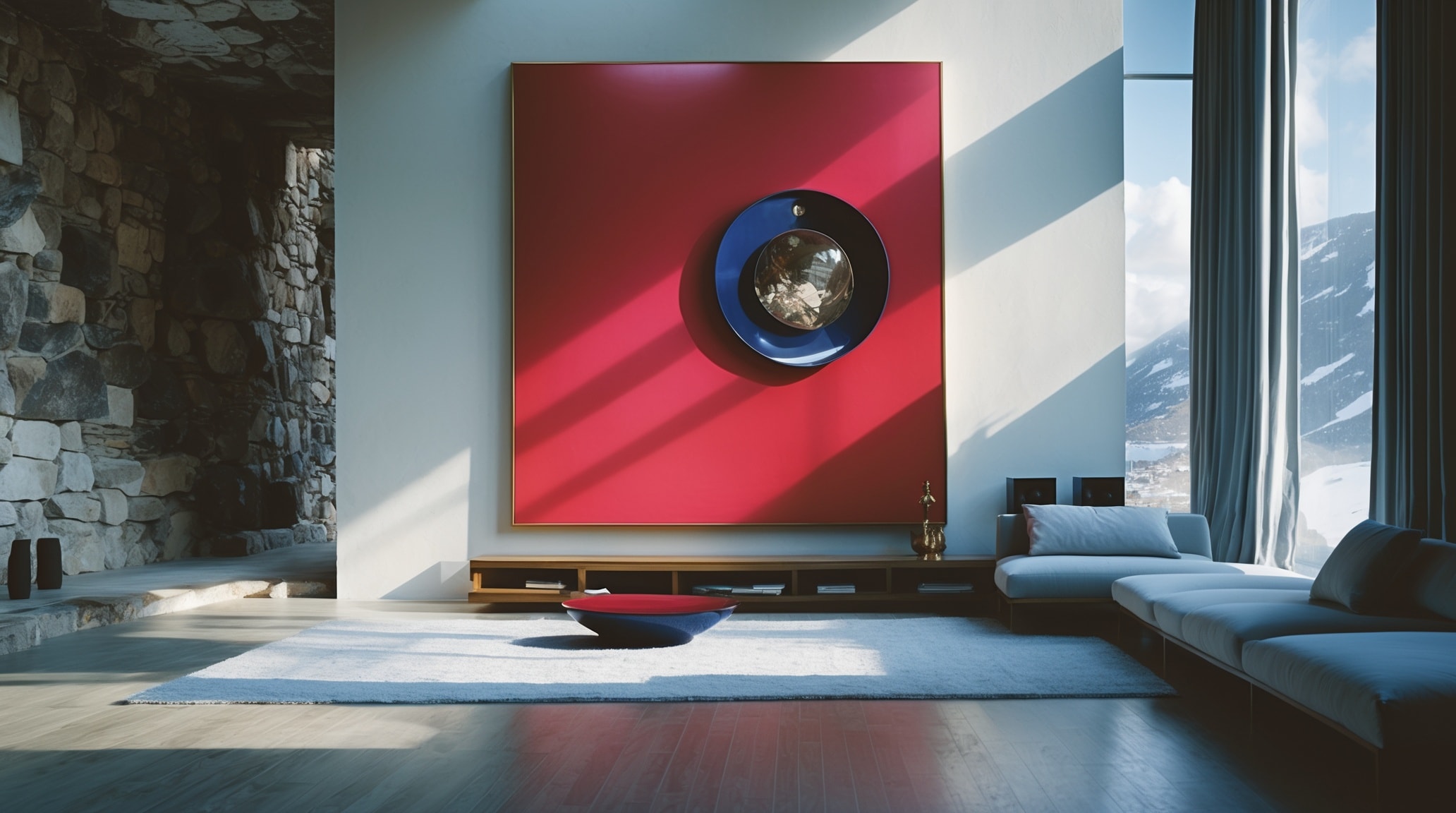
Choosing large-scale abstract art for a luxury interior is, at its core, a decision about color. A poorly chosen palette can destabilize an entire room, creating visual tension where the designer intended serenity. The most sought-after works in this genre are those where the color relationships are masterfully resolved: harmonious without being predictable, bold without being aggressive. Collectors who have spent time at Art Basel or the Frieze Art Fair will recognize this quality immediately; it is the difference between a work that stops you and a work that holds you.
The ideal abstract work for a minimalist luxury interior carries what designers call "chromatic intelligence," a palette that speaks to the room's existing tones while introducing enough contrast and depth to command attention. Whether the interior leans toward warm neutrals, cool stone, or dramatic dark lacquer, the right abstract work acts as the chromatic keystone that locks the entire composition together.
Metal as the Ultimate Contemporary Surface
One of the most significant evolutions in large-scale contemporary abstract art is the move toward metal substrates. Where canvas has been the default for centuries, aluminum and steel panels offer a dramatically different relationship between paint, surface, and light. The reflective qualities of metal allow impasto textures to cast micro-shadows that shift with the viewer's position, creating a dynamic, almost cinematic quality that is uniquely suited to the clean lines and polished surfaces of luxury minimalist interiors.
This is a particularly compelling choice for spaces with high ceilings, expansive glass walls, or architectural lighting designed to graze surfaces. The interplay between the metal ground and the built-up texture above it produces a depth that cannot be replicated on any other surface. For collectors furnishing a penthouse, a modern estate, or a high-end commercial environment, works on metal represent the contemporary frontier of fine art acquisition.
The Gabrielle Benot abstract collection speaks directly to this intersection of scale, texture, and chromatic mastery. Each work is conceived as a complete environmental statement, with harmonious palettes and signature impasto surfaces that transform minimalist interiors into spaces of genuine emotional resonance. For collectors who understand that the right piece of art is the most powerful design decision in a room, this is the place to begin.