Explore why automotive art has become the defining luxury aesthetic of our era, how supercar culture mirrors Renaissance patronage, and how the psychology of speed translates into museum-worthy fine art.
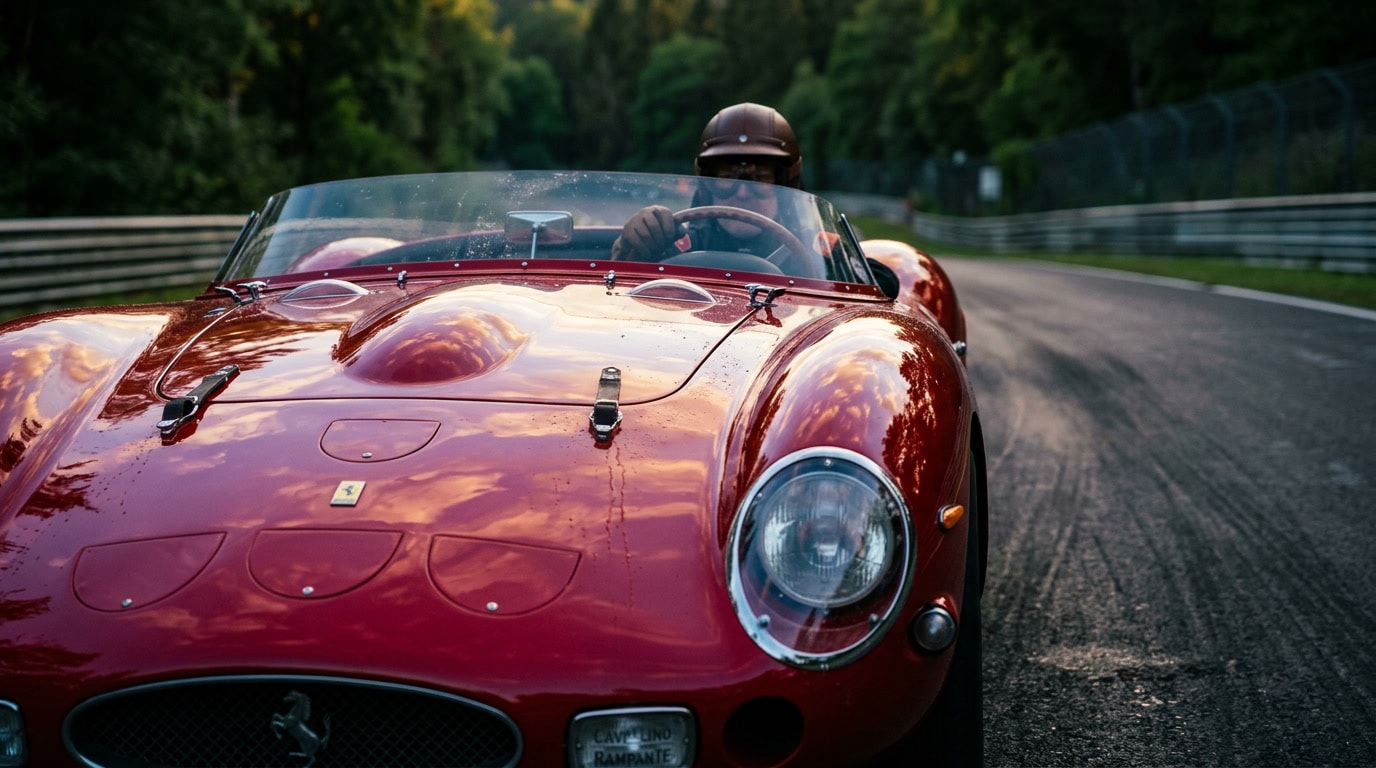
The Machine as Muse: A Centuries-Old Obsession Reborn
There is a particular kind of reverence that surrounds a great machine. The way light breaks across the hood of a Ferrari 250 GTO, the low growl of a Bugatti Chiron at idle, the almost violent elegance of a McLaren F1 at full throttle on the Nürburgring. These are not merely engineering achievements. They are cultural artifacts, as loaded with meaning and desire as any oil painting hanging in the Louvre.
The history of art has always tracked the history of power. During the Italian Renaissance, the Medici family didn't simply collect art; they commissioned it as a declaration of civilization itself. Botticelli, Michelangelo, and Leonardo da Vinci were funded not out of charity but out of a profound understanding that beauty was the highest form of authority. Today, that same impulse lives inside the world's most serious supercar collectors.
"Speed is not the subject. Speed is the feeling of being fully alive, and great automotive art captures that sensation long after the engine goes quiet."
Why the Psychology of Speed Translates So Powerfully to Visual Art
Neuroscience has begun to catch up with what art collectors have always intuitively understood. The human brain processes images of motion, tension, and mechanical power through the same neural pathways activated by genuine physical experience. A painting of a Porsche 917K banking hard at Le Mans doesn't merely depict speed; it physiologically recreates a version of it. According to research published through institutions like ScienceDirect, mirror neuron systems activate when we observe dynamic, high-energy imagery, which is precisely why automotive art commands such extraordinary emotional authority in a room.
This is the same principle that made Franz Kline's explosive black-and-white gestural paintings feel like collision and force rather than simple abstraction. The body responds to visual energy before the mind has time to intellectualize it.
Supercar Culture as the New Renaissance Patronage
Consider the parallels. Jay Leno, one of the most celebrated automotive collectors in the world, has spoken at length about the idea that great cars are the sculpture of the industrial age. The Pebble Beach Concours d'Elegance, held annually on the 18th fairway of Cypress Point, is not a car show. It is a curated exhibition of mechanical masterpieces, judged with the same critical rigor applied to fine art at Art Basel. The collectors who gather there are not hobbyists. They are patrons, in the most classical sense of the word.
What has shifted in the last decade is the recognition that the art inspired by these machines carries equal cultural weight. A large-scale work on metal that captures the visceral tension of a Formula 1 car navigating the hairpin at Monaco doesn't simply decorate a space. It anchors it, gives it a philosophy, a point of view about beauty, risk, and the pursuit of perfection.
Metal as the Only Honest Canvas for Speed
There is a conceptual logic to painting automotive art on metal rather than canvas. The substrate itself carries the language of the subject. Industrial, precise, reflective, and unforgiving, metal demands a different kind of mark-making. Texture becomes structural. Light behaves unexpectedly. The surface pushes back.
The Speed Collection works on metal embody exactly this tension, where the physical energy of the Guscio technique meets the iconography of machines built at the absolute edge of human capability. These are not illustrations of cars. They are investigations into what speed feels like as a lived, embodied experience.
Frequently Asked Questions
- What makes automotive art a serious fine art category? Automotive art engages the same aesthetic principles as any major genre: composition, light, tension, and cultural symbolism. When executed at the level of fine art rather than illustration, it belongs in the same conversation as figurative or abstract work.
- Why is large-scale art more impactful for automotive subjects? Scale mirrors the physical presence of the subject. A supercar is an immersive, full-body experience. Art that captures it at a small scale loses the visceral quality that makes the subject compelling in the first place.
- Is automotive fine art a strong investment? Collecting at the intersection of two high-value worlds, fine art and automotive culture, has historically produced strong long-term appreciation, particularly for original works by artists with a documented exhibition history and critical following.