Discover why large-scale abstract wall art is the defining element of luxury penthouse and mansion interiors. Explore the history, psychology, and collector's guide to choosing monumental art for grand spaces.
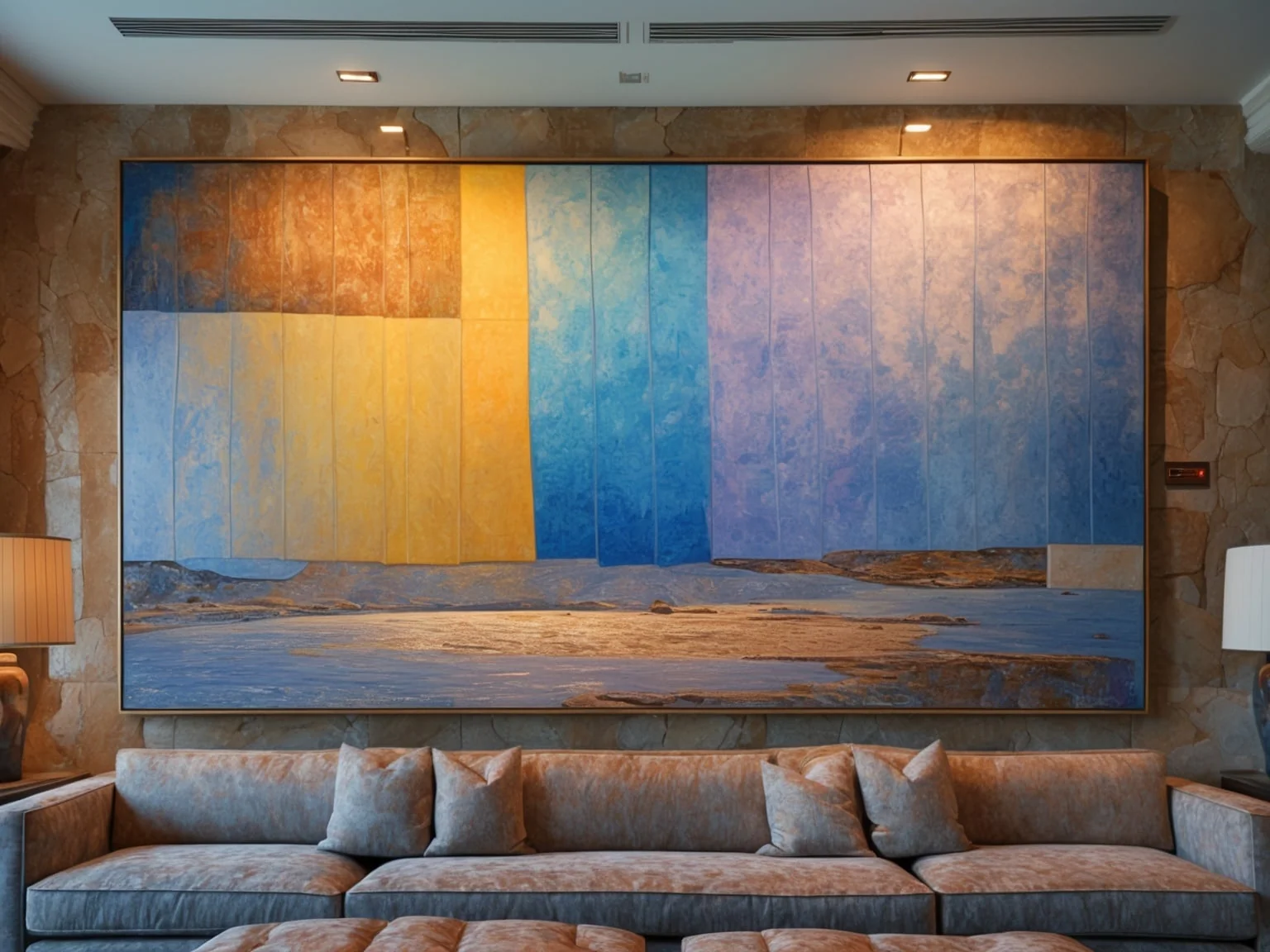
Scale Is Not a Preference. It Is a Statement.
There is a moment that every serious collector knows. You walk into a room and something stops you. Not the architecture, not the furniture, not the view. The painting. A single, large-scale abstract work that does not merely hang on a wall but becomes the wall, redefining the entire spatial experience around it.
This is not accident. It is intention, refined over decades of art history and interior design philosophy.
The Historical Roots of Monumental Abstraction
The ambition to create art at an architectural scale is ancient, but its modern language was forged in mid-century New York. Mark Rothko believed that large paintings could envelope the viewer in pure emotion, dissolving the boundary between observer and artwork. His legendary Seagram Murals, originally conceived for the Four Seasons restaurant, were paintings designed to inhabit a room rather than simply occupy it. Joan Mitchell brought that same fearless scale to her gestural canvases, producing works that felt like weather systems captured in pigment.
What those artists understood intuitively, neuroscience now confirms: large-scale art activates a fundamentally different psychological response than smaller works. The peripheral vision engages. The body responds. The room transforms.
"A painting of genuine scale does not decorate a room. It reorganizes it, establishing a new gravitational center around which everything else orbits."
Choosing the Right Scale for a Grand Space
One of the most frequently asked questions among luxury buyers is: how large should art be for a high-ceiling or open-plan space? The answer is almost always: larger than you think. In a penthouse with 12-foot ceilings or a mansion great room, a painting under 60 inches will visually disappear. The rule of thumb used by top interior designers, including those featured regularly in Architectural Digest, is to fill between 60 and 75 percent of a wall's width with a single commanding work, or create a curated grouping that achieves the same visual mass.
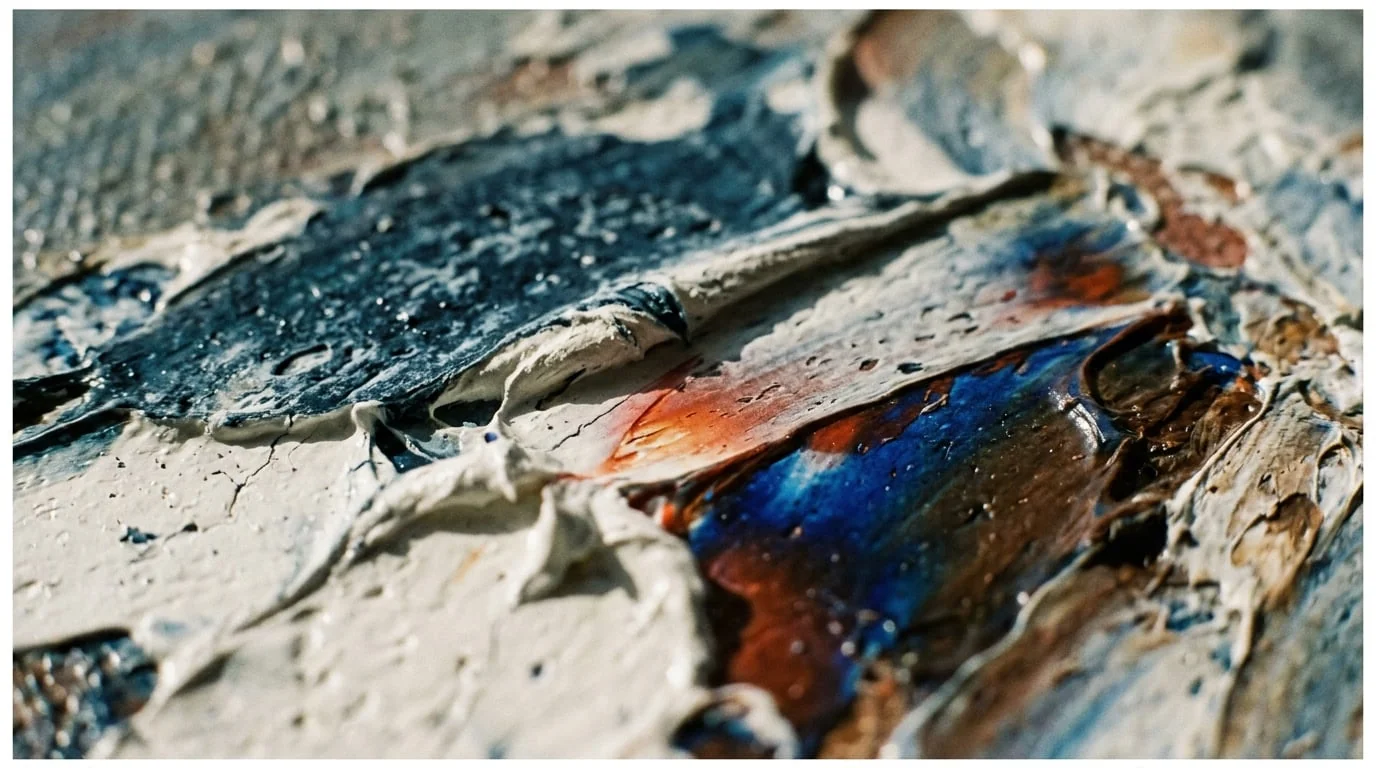
Texture amplifies this effect dramatically. A flat, printed reproduction reads as decoration. An original work with genuine surface relief, built-up pigment, and physical depth reads as architecture. It casts actual shadows. It changes with the light throughout the day. It is, in the truest sense, alive.
Abstract Art and the Luxury Interior: A Natural Alliance
Abstract art occupies a unique position in luxury residential design precisely because it resists specificity. Unlike figurative work, a powerful abstract composition adapts to its environment, absorbing the personality of the collector and the character of the space. Elon Musk, Jeff Koons, and generations of Rockefellers understood this: the most enduring private collections are built around works that provoke rather than merely please.
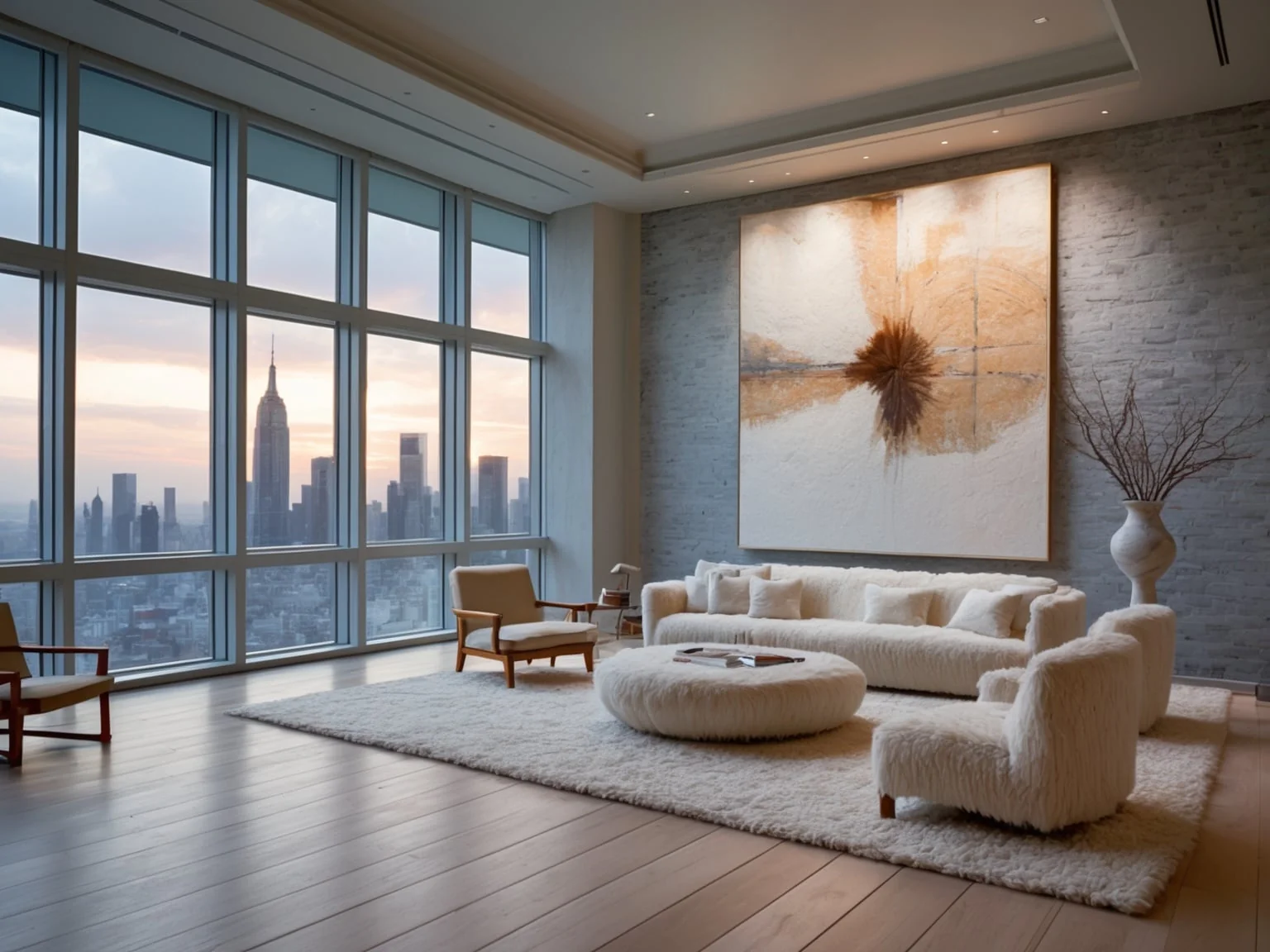
The finest abstract works for penthouse and mansion interiors share several qualities: commanding physical scale, genuine textural complexity, a sophisticated and considered palette, and the unmistakable evidence of a human hand. These are not qualities that can be manufactured or mass-produced.
The Gabrielle Benot Abstracts Collection was conceived with exactly these environments in mind. Each piece is built with her signature Guscio technique, a proprietary layering process that creates extraordinary surface depth and textural complexity at monumental scale. These are works that reward proximity and command distance in equal measure, the defining quality of truly great large-format art.
A Collector's Quick Reference
- Ceiling height under 10 feet: Aim for works 48 to 60 inches tall to create vertical drama without overwhelming.
- Ceiling height 10 to 14 feet: Works 60 to 84 inches tall are the sweet spot for penthouses and formal living rooms.
- Grand halls and double-height spaces: Consider diptychs or triptychs exceeding 96 inches in combined width for true architectural impact.
- Palette: Neutral architectural spaces welcome bold chromatic abstraction; already saturated interiors benefit from tonal, textural works in earthy or metallic registers.
The most important question is not which painting fits the wall. It is which painting changes the room.