Discover the neuroscience behind why smiling is contagious. Explore how mirror neurons trigger measurable psychological and physiological changes in the

There is a moment, familiar to almost everyone, when a stranger's smile crosses the room and something shifts inside you before you have had time to think. You did not choose the response. You did not reason your way into warmth. The feeling arrived first, unbidden and immediate, as though the smile belonged to you as much as to its owner. This is not metaphor. It is measurable, documented, and one of the most quietly astonishing facts in the entire field of neuroscience.
The Mirror That Lives Inside You
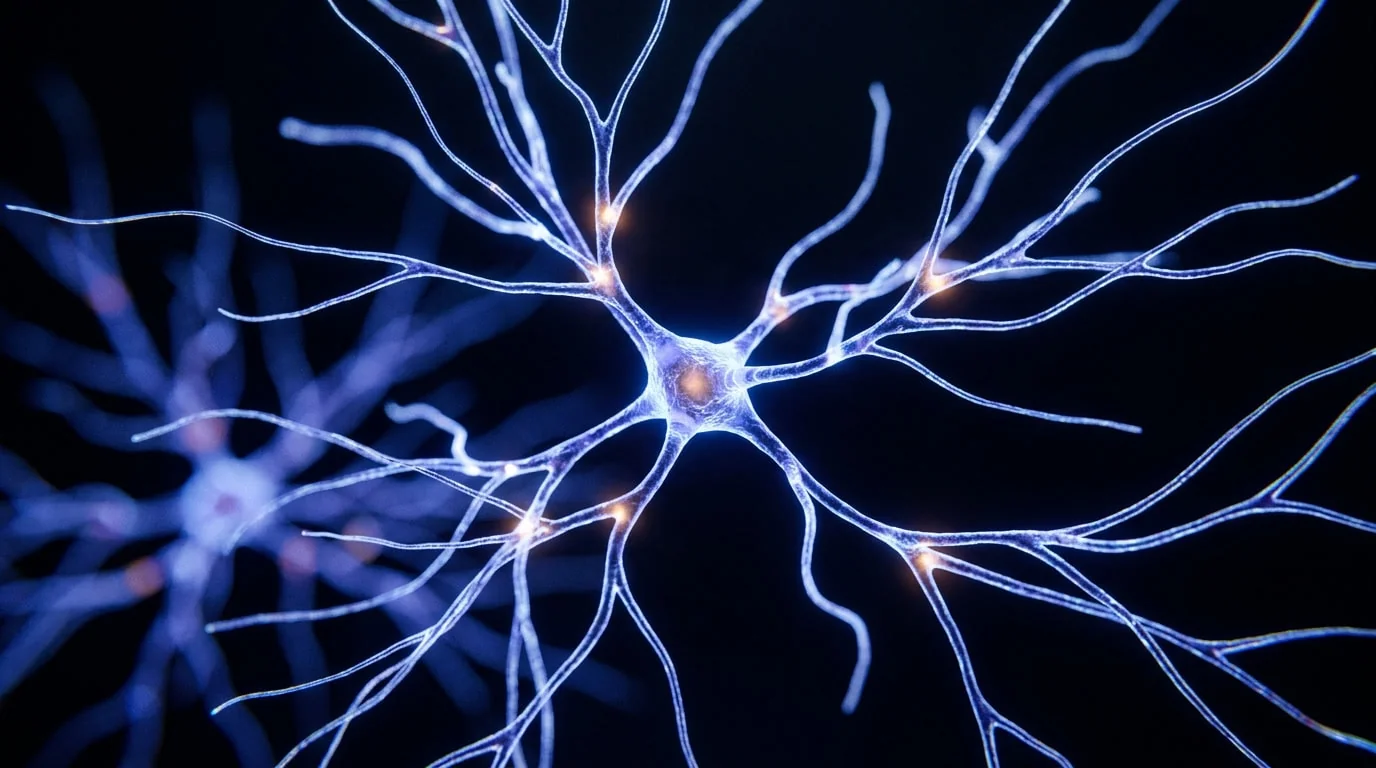
In the early 1990s, a team of Italian researchers led by Giacomo Rizzolatti at the University of Parma made a discovery that would reshape how science understood the brain. While studying motor neurons in macaque monkeys, they noticed that certain neurons fired not only when the monkey performed an action, but identically when the monkey observed someone else performing the same action. The brain, it turned out, does not cleanly separate doing from witnessing. It rehearses what it sees. These neurons, eventually named mirror neurons, were later identified in human subjects through neuroimaging studies, and their implications for emotional experience proved even more profound than their original motor context suggested.
When you observe a smile, your mirror neuron system activates the same facial muscle regions involved in producing that smile yourself. The zygomaticus major, the muscle responsible for pulling the corners of the mouth upward, receives a faint neurological signal even when your face remains still. Your brain is, in a very literal sense, trying on the expression it sees. This is the biological engine beneath what psychologists call emotional contagion: the largely unconscious process by which one person's emotional state transfers to another through observation alone. The transfer requires no intention on either side. It simply happens, because the architecture of the brain was built for it.
What the Body Does Next
The mirror neuron response to a smile does not stop at the face. Once the brain simulates the expression, it triggers a cascade of physiological events that mirror the internal state associated with genuine joy. Research documented in peer-reviewed studies (accessible through ScienceDirect) has shown measurable reductions in cortisol, the primary stress hormone, following even brief exposure to smiling faces. Heart rate variability, a key marker of autonomic nervous system regulation, shifts toward a more relaxed pattern. The body does not wait for the mind to confirm that everything is fine. It simply responds to the signal it has received.
This is the facial feedback hypothesis, first proposed by Charles Darwin and later formalized by psychologist Paul Ekman: the physical act of smiling, whether initiated by genuine emotion or by the muscular mimicry triggered through observation, feeds back into the emotional centers of the brain and amplifies the feeling itself. The smile you borrow from a stranger becomes, neurologically speaking, partially your own. The direction of causality, in other words, runs both ways. Expression does not merely follow feeling; it also produces it.
The brain does not cleanly separate doing from witnessing. It rehearses what it sees, and in that rehearsal, something real is created.
Joy as a Shared Physiological Event
What makes this particularly remarkable is the speed at which it operates. Studies using electromyography, which measures micro-muscular activity in the face, have recorded responses to a smiling image in under 300 milliseconds. That is faster than conscious recognition. You have already begun to smile before you know you are looking at one. The philosopher William James argued in the late nineteenth century that emotions are, at their core, the perception of bodily changes rather than the cause of them. The neuroscience of mirror neurons has given that controversial idea a structural foundation that James himself could not have imagined.

This also explains why certain environments, and certain works of art, have the power to alter a visitor's mood in ways that feel disproportionate to the stimulus. The emotional residue left by an image, a color, or a composition is not purely aesthetic judgment. It is physiological. The viewer's nervous system is actively participating in what it observes, not as a passive recipient but as something closer to a collaborator, completing the emotional circuit the image began.
When Art Becomes the Smile in the Room
This understanding of emotional contagion reframes the role of visual art in a living space in a profound way. Art that carries warmth, luminosity, and harmonious color does not merely decorate a room. It functions as a persistent emotional signal, one the nervous system reads and responds to every time it enters the field of vision. Institutions like MoMA have long explored the psychological dimensions of color and form, and researchers in environmental psychology have consistently found that the visual character of a space measurably influences cortisol levels, mood, and even cognitive performance over time.
The Gabrielle Benot Faces Collection engages this territory with particular directness. The works in this series do not simply depict expression; they construct it through texture, color, and scale in ways that invite the viewer's mirror system to participate. The result is not a painting you look at from a distance. It is a painting that looks back, and changes something in the looking.
The contagion of joy, it turns out, does not require proximity, shared language, or even consciousness. It requires only the right signal, delivered with enough warmth and conviction to cross the space between one nervous system and another. Great art has always known this. Neuroscience is simply learning to measure it.