Learn how to choose original art for luxury interiors. From scale and texture to color harmony, this definitive guide helps collectors and designers select works that transform high-end spaces.

There is a moment, familiar to every serious collector and interior designer, when a room stops being beautiful and becomes something else entirely. The furniture is impeccable. The architecture is considered. The light is perfect. And then a single work of art is introduced, and the space finds its soul. That transformation is not accidental. It is the result of intentional choices about scale, texture, color, and the rare quality that separates original fine art from everything else: genuine artistic conviction.
Why Scale Is the First Decision, Not the Last
One of the most common mistakes buyers make when acquiring art for luxury interiors is treating scale as an afterthought. The question "what size art should I choose for a large wall?" is among the most searched in the intersection of art and design, and the answer is almost always: larger than you think. In grand residential spaces, hotel lobbies, or the kind of architectural environments featured in Architectural Digest, artwork that fails to command its wall simply disappears. It reads as decoration rather than art.
A general principle respected by top interior designers is that a work should occupy between 60 and 75 percent of the wall it anchors. For double-height spaces or open-plan living areas, a single monumental piece will almost always outperform a gallery wall in terms of visual authority. Scale is not about filling space; it is about establishing presence.
Texture as the Defining Luxury
In an era saturated with digital prints and reproductions, physical texture has become one of the clearest markers of authentic luxury in art. Collectors who have spent time in the company of genuine impasto works, where paint is built into sculptural relief, consistently describe the experience as fundamentally different from viewing a flat image. There is a tactile intelligence to heavily worked surfaces that communicates itself even from across a room. Joan Mitchell understood this. So did de Kooning. The physical accumulation of material is itself a record of time, intention, and mastery.
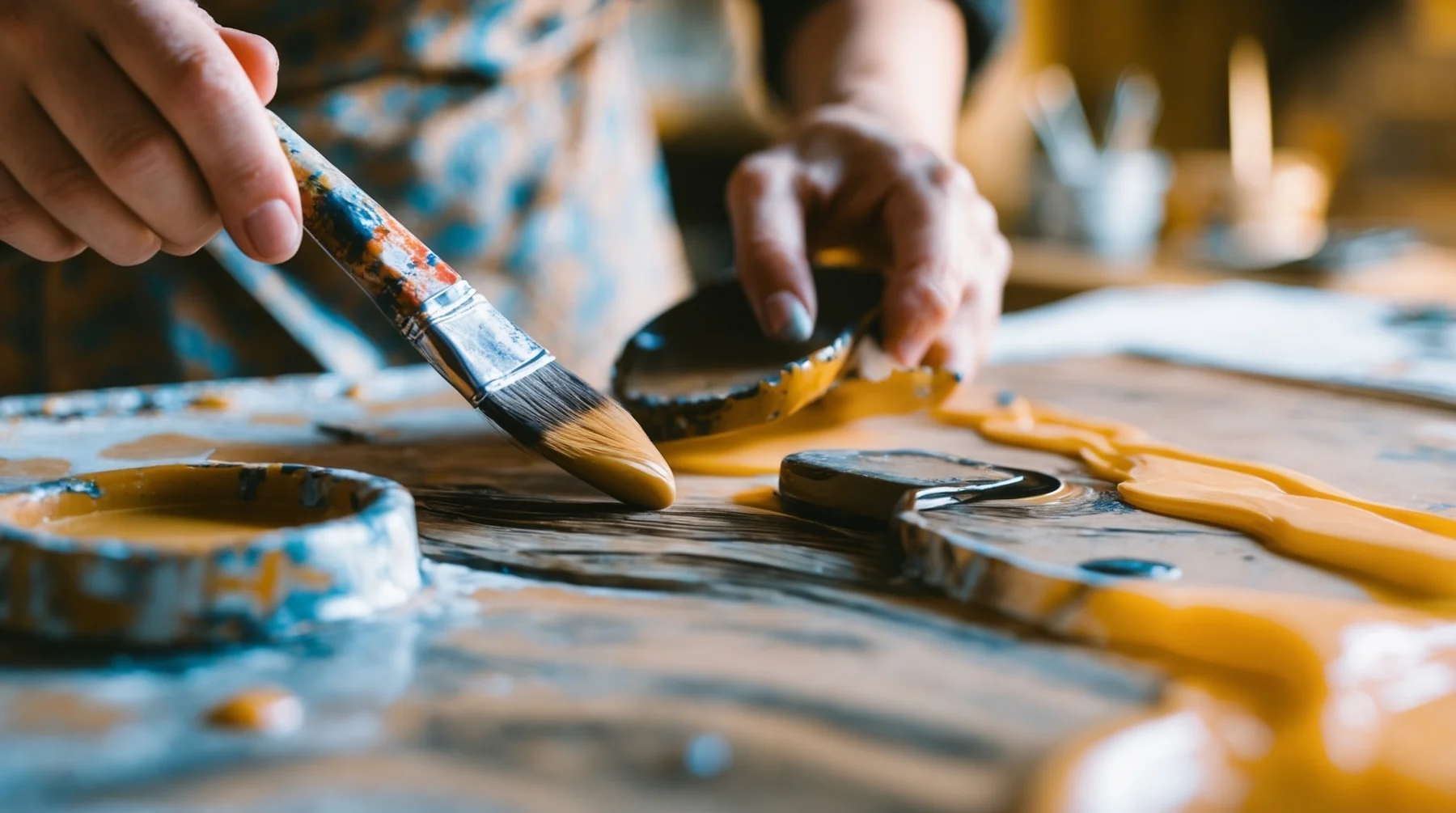
This is precisely why textural fine art has seen sustained demand at the highest levels of the market. When a work carries genuine depth, it responds to changing light throughout the day, shifting in character from morning to evening. It is never the same piece twice. For luxury interiors where the quality of natural and artificial light is carefully curated, this responsiveness is not a minor detail; it is the defining quality of a living artwork.
"The works that endure in great collections are not the ones that matched the sofa. They are the ones that changed the room."
Color Harmony: The Most Underestimated Skill in Fine Art
Ask any seasoned collector what they notice first about a work they love, and the answer is almost invariably color. Not subject matter. Not even composition. Color. The ability to construct a palette that is simultaneously bold and harmonious, surprising yet inevitable, is among the rarest skills in contemporary painting. Mark Rothko spent decades exploring how color relationships could produce emotional states in viewers. His findings, validated by generations of collectors and museum-goers, confirm what designers have always intuited: color is the most direct emotional language in a room.
When acquiring art for a luxury interior, the question is not whether the colors "match" the existing palette. That approach produces interiors that feel assembled rather than composed. The more sophisticated question is whether the artwork's color relationships are internally resolved. A work with a masterfully balanced palette will integrate into almost any refined interior because it carries its own harmonic logic. It does not compete with the space; it completes it.
Original Works on Unconventional Surfaces

Among the most compelling developments in contemporary luxury art collecting is the growing appetite for works executed on non-traditional surfaces. Metal, in particular, has emerged as a substrate of remarkable sophistication. Paint applied to aluminum or steel behaves differently than on canvas or linen; it achieves luminosity and depth that are genuinely impossible to replicate on traditional supports. For collectors furnishing spaces with strong architectural identities, works on metal introduce a material conversation between the art and the environment that elevates both.
The intersection of fine art and automotive or industrial aesthetics has also produced some of the most visually arresting collecting categories of the current decade. Pieces that capture the dynamism of speed, the precision of engineered form, or the sensory drama of high-performance events like the Monaco Grand Prix carry a cultural weight that resonates powerfully in the private spaces of serious collectors. They are not merely decorative; they are biographical statements about taste, passion, and the world one inhabits.
How to Evaluate an Original Work Before You Buy
Buying original art is a different discipline from buying luxury goods, and it rewards a specific kind of attention. Before acquiring a significant piece, consider three things: the internal consistency of the work (does every element serve the whole?), the artist's technical command (is the execution as ambitious as the concept?), and the work's behavior in different lighting conditions. If possible, view the piece at different times of day. A work that reveals new qualities under different light is a work with genuine depth, and genuine depth is what sustains a collection over decades.
For collectors building interiors with intention, the full collection at Gabrielle Benot offers a considered range of large-scale originals that address precisely these criteria: monumental scale, extraordinary textural richness, and color palettes that have become a signature of the work. Each piece is a complete artistic statement designed to anchor and transform the spaces serious collectors build.
The rooms that endure in memory are never the ones with the most expensive furniture or the most precise architecture. They are the ones where a single work of art made everything else make sense. That is the standard worth collecting to.