Discover the Guscio technique in fine art - a rare, signature textural method that transforms paint into sculptural relief. Learn what makes Guscio paintings collectible and where to buy original works.
When Paint Becomes Sculpture
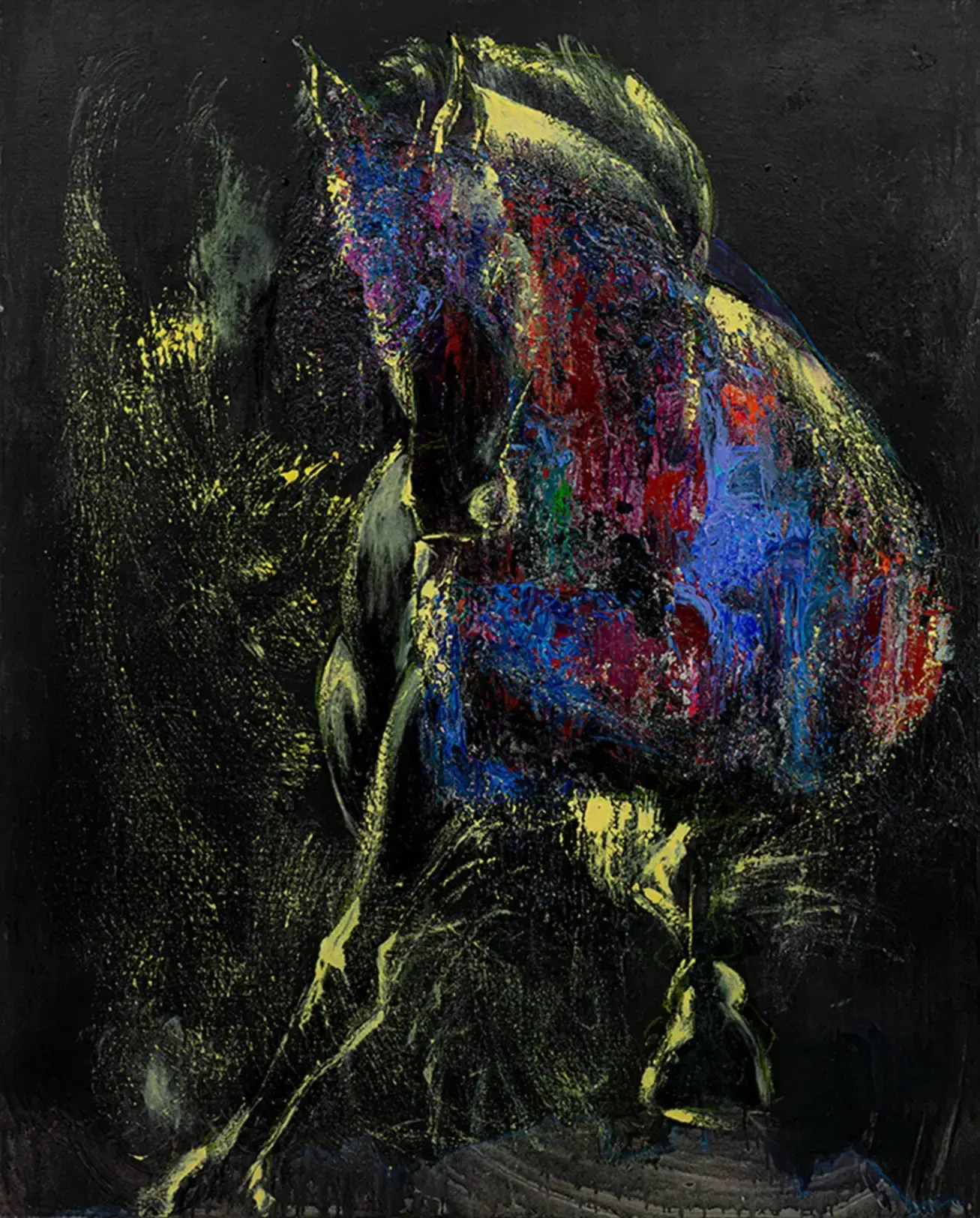
There is a moment, standing before certain paintings, when the eye is no longer enough. The hand wants to reach out. The surface pulls at something instinctive, something primal. This is not an accident of craft. It is the deliberate, mastered result of working in true textural relief, where paint is no longer applied but constructed.
The Guscio technique operates in this rare territory. Derived from the Italian word for shell or husk, Guscio is a proprietary layering and sculpting process that builds the painted surface into dimensional topography. Think of it less as painting and more as geology: strata of medium accumulate, are carved, pressed, and allowed to cure before the next layer arrives. The result is a surface that catches light differently at every hour of the day, that holds shadow in its grooves, and that changes entirely depending on where you stand in the room.
"A Guscio painting does not simply occupy a wall. It alters the atmosphere of an entire room, the way a Rothko field of color can make the air feel heavier, or a Cy Twombly scrawl can make silence feel textured."
The Historical Lineage of Textural Painting
Textural painting is not new. Rembrandt famously built up his impasto to such thickness that scholars have used X-ray imaging to study the buried layers beneath his portraits. In the 20th century, artists like Jean Dubuffet and Antoni Tàpies elevated raw material into high art, embedding sand, burlap, and resin into their surfaces. MoMA's permanent collection holds some of the most significant examples of this lineage, works where the physical substance of the art is inseparable from its meaning.
What distinguishes Guscio from conventional impasto or mixed-media texture is its architectural precision. The technique is not about spontaneous gesture alone. It demands patience, structural planning, and an intimate understanding of how materials cure, contract, and interact over time. Each work is, in the most literal sense, unrepeatable.
Why Collectors Are Drawn to Guscio Works
Serious collectors, the kind who acquire pieces at Art Basel or commission through private galleries, increasingly seek works that hold their own against interior architecture. A flat canvas can feel decorative. A Guscio piece commands the room the way a piece of fine sculpture does, with physical presence and an insistence on being noticed.
There is also the investment dimension. Original textural works with a documented, signature technique carry provenance that is both aesthetic and technical. They cannot be convincingly reproduced as prints. The surface is the art.
The Gabrielle Benot abstract collection showcases Guscio at its most expressive, large-scale works where color and relief operate together as a single unified force. Each piece is an original, built by hand, and carries the irreducible character that only a physical, layered process can produce.
Frequently Asked Questions About Guscio Art
- What is the Guscio technique? Guscio is a proprietary sculptural painting method that builds the surface into dimensional relief through precise layering, carving, and curing of specialized mediums.
- Is Guscio the same as impasto? No. Impasto refers broadly to thick paint application. Guscio is a structured, multi-stage architectural process that produces far greater depth, precision, and structural complexity.
- How do I display a Guscio painting? These works perform best with directional lighting, either natural side light or gallery-style track lighting, which allows the relief to cast shadows and reveal the full dimensionality of the surface.
- Where can I buy an original Guscio painting? Original Guscio works are available exclusively through the official portfolio and shop at gabriellebenot.com.
- Are Guscio paintings suitable for large walls? Exceptionally so. The technique was developed with large-scale architectural spaces in mind, and the works scale with authority in both residential and commercial environments.