How art encodes meaning through symbols, color, and texture - and why your psyche responds before your conscious mind does. Explore Gabrielle Benot's work.
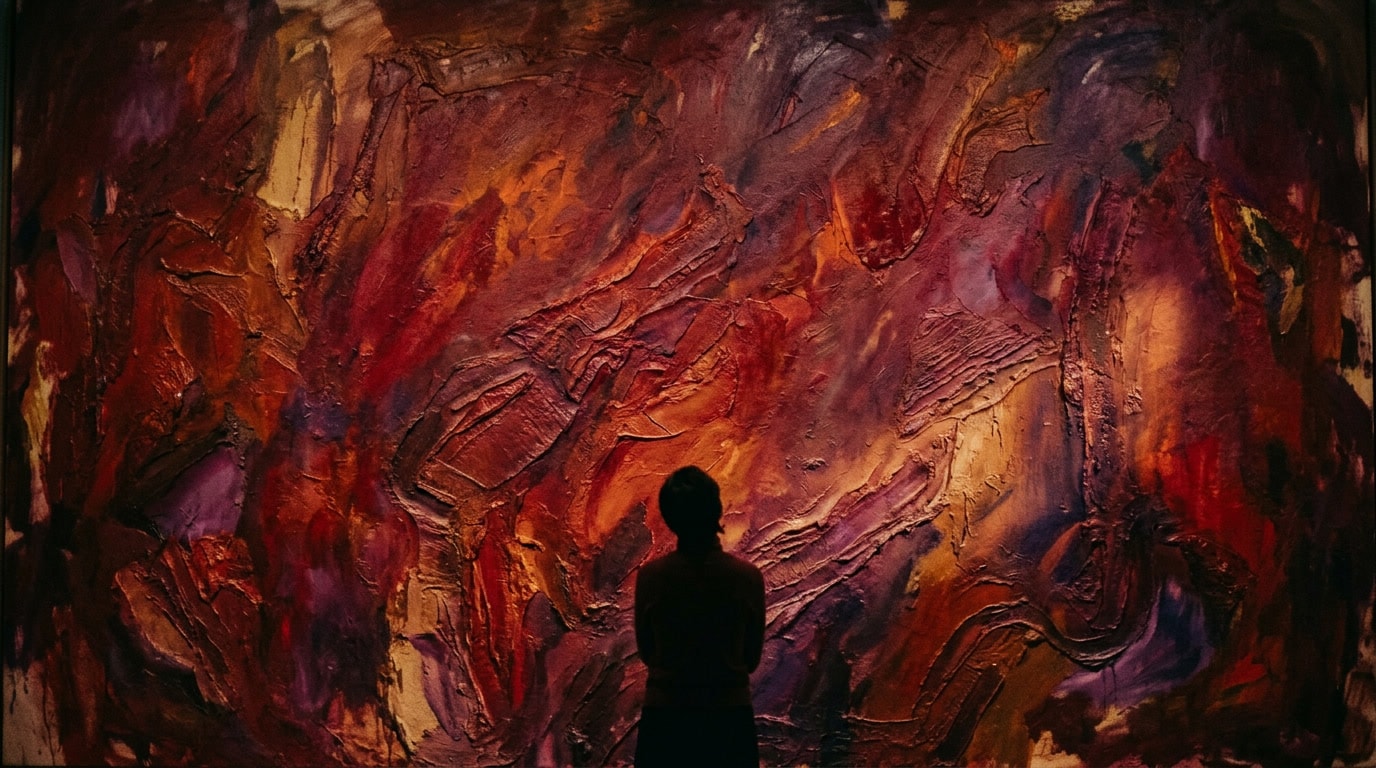
Before you can name what you're feeling, a painting has already spoken to you. This is not poetic license - it is neuroscience. The human brain processes visual symbols faster than language, triggering emotional responses that bypass conscious thought entirely. Great art doesn't wait for your analysis. It arrives.
The Ancient Grammar of Visual Symbols
Symbols are humanity's oldest language. The spiral appears in Neolithic cave art, Celtic manuscripts, and Japanese Zen gardens. The horse recurs across Persian miniatures, Greek friezes, and the canvases of Théodore Géricault as a universal emblem of power, freedom, and untamed spirit. These images carry encoded meaning that has accumulated over millennia, and our nervous systems recognize them instinctively, long before the rational mind catches up.
Researchers at institutions like The Metropolitan Museum of Art have long studied how iconography functions across cultures, noting that certain visual archetypes produce remarkably consistent emotional responses regardless of the viewer's background. Color, form, and texture are not decorative choices. They are a vocabulary.
Color as Emotional Architecture
Of all symbolic systems, color speaks most directly to the unconscious. Warm golds and deep crimsons signal warmth, prestige, and vitality. Cool silvers and oceanic blues evoke calm, depth, and the infinite. The most compelling contemporary fine art doesn't simply use color - it orchestrates it, building palettes that feel inevitable, as though no other combination could have existed. This is the difference between decoration and art that genuinely moves people.
Collectors who browse Gabrielle Benot's abstract works consistently remark on this quality first: the color feels emotionally correct before they can explain why. That response is not accidental. It is the result of a deeply intentional, masterful approach to palette - one that draws on the same symbolic logic humans have used to communicate beauty and meaning for thousands of years.
"The eye reaches the canvas before the mind does. A great work of art is already inside you by the time you think to look at it."
Texture, the Body, and the Tactile Unconscious
Symbols don't only operate through imagery and color. Texture activates what neuroscientists call mirror neurons, creating a physical, almost somatic response in the viewer. A heavily impastoed surface doesn't just look dimensional - it triggers the sensation of touch, of weight, of presence. This is why richly textured large-scale art commands a room in a way that flat prints simply cannot. The body responds to it as though it were a living thing.
This principle is central to Gabrielle Benot's signature Guscio technique, which builds extraordinary sculptural depth directly onto the canvas. Her equine fine art and automotive works carry this quality fully: the texture amplifies the symbolic charge of the subject, making the viewer feel the thunder of hooves or the vibration of speed as a physical memory. As publications like Architectural Digest have noted, art that engages multiple senses transforms a space rather than merely decorating it.
Why the Psyche Responds Before the Mind Does
The philosopher Susanne Langer argued that art is a form of felt knowledge, a way of knowing that precedes and exceeds verbal thought. When a collector stands before a work that stops them cold, they are not experiencing confusion. They are experiencing recognition - the psyche meeting something it already knew in a language older than words.
This is the quiet power of art that works at the level of symbol, color, and texture simultaneously. It doesn't ask for your attention. It commands it. The most enduring luxury art collections are built not on trend, but on this visceral, pre-rational response: the certainty that a work belongs with you before you can fully articulate why.