Explore the neuroscience behind why collectors are drawn to joyful art. Discover how mirror neurons, dopamine, and facial recognition create profound emotional responses to portraiture that radiates happiness.

In 1967, a neuroscientist named Paul Ekman was studying facial expressions in Papua New Guinea when he made a discovery that would reshape our understanding of human emotion. He showed photographs of smiling faces to indigenous people who had never seen Western media, and they immediately recognized the expression as joy. The smile, it seemed, was not a cultural invention but a biological universal, hardwired into the human nervous system across every continent and culture. What Ekman didn't know then was that the recognition of that smile would later prove to involve far more than simple visual perception. It would activate a network of neurons in the observer's brain that essentially replayed the emotion being witnessed.
Today, when you stand before a portrait that radiates genuine happiness, your brain is not passively receiving visual information. It is performing an act of neural simulation. Mirror neurons, first discovered in macaque monkeys in the 1990s by Italian neuroscientist Giacomo Rizzolatti, fire in patterns that mirror what the subject's brain is doing. If the face in the portrait shows authentic joy, your mirror neuron system activates in sympathy, and for a fleeting moment, your brain is experiencing something remarkably close to what the depicted person experienced when that smile was formed. This is not metaphorical. This is neurobiology.
The Mirror Neuron Revolution: When Seeing Becomes Feeling
Rizzolatti's discovery emerged almost by accident. His team was recording from motor neurons in a macaque's brain when one of the researchers picked up a piece of food. The monkey watching this action showed neural firing patterns identical to those of the monkey performing the action, despite doing nothing itself. The implications were staggering. The brain, it appeared, contained a system designed to internally simulate the actions and intentions of others. For the first time, neuroscience had identified a biological mechanism for empathy.
In humans, the mirror neuron system extends far beyond simple motor actions. It activates when we observe facial expressions, particularly emotional ones. When you see a genuine smile, specific populations of mirror neurons fire in your inferior frontal cortex and inferior parietal lobule, regions associated with both emotion and intention understanding. Your brain is not merely cataloging the upturned corners of a mouth. It is reconstructing the internal state that produced that smile. You are, in essence, borrowing the emotional experience of the person you are observing.
This mechanism explains why a photograph of a truly joyful face can produce an almost involuntary emotional response in the viewer. Unlike a forced or artificial smile, which activates different neural pathways and fails to trigger robust mirror neuron firing, a genuine smile (what researchers call a Duchenne smile, characterized by contraction of both the zygomatic major muscle around the mouth and the orbicularis oculi muscle around the eyes) sends a clear signal to your mirror neuron system: this is authentic emotion. Your brain responds accordingly, releasing neurochemicals that produce a cascade of feelings in your own body.
A genuine smile is not a social performance. It is a window into another person's nervous system, and your brain is equipped to read it.
Dopamine, Reward, and the Collector's Compulsion
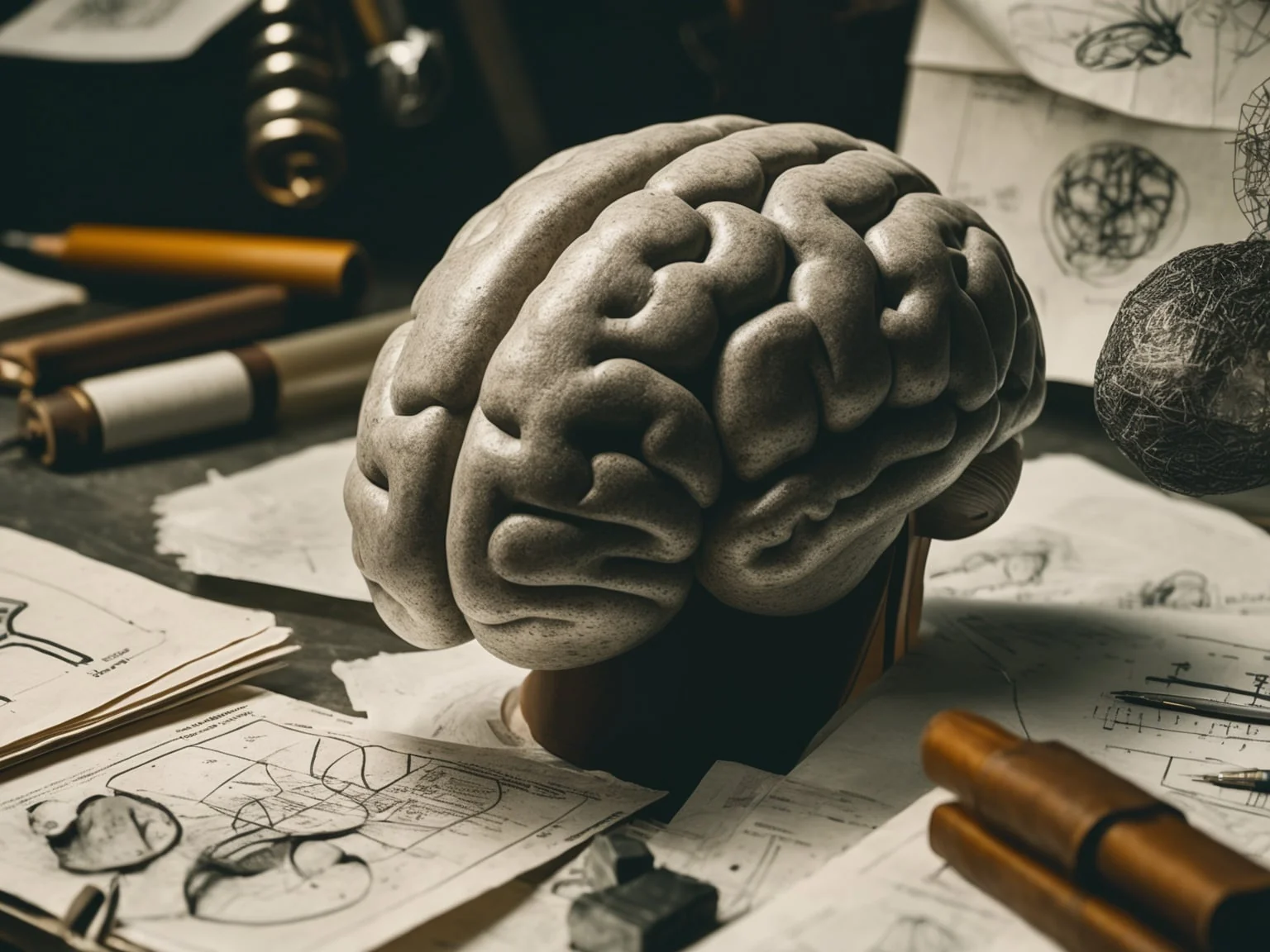
The moment your mirror neurons activate in response to authentic joy in a portrait, a second neurological event unfolds. Your brain begins releasing dopamine, a neurotransmitter associated not merely with pleasure, as popular understanding suggests, but more precisely with reward prediction and motivation. Dopamine doesn't make you feel good in the moment. It makes you want to approach, to engage, to possess. It is the neurochemistry of desire.
When collectors encounter a portrait that radiates genuine happiness, they are experiencing a compounding neural reward. First, the mirror neuron system creates a sympathetic emotional resonance. Second, the recognition of authentic human connection triggers dopamine release, which generates a sense of value and desirability. The brain interprets this as: this is something worth having, something that will continue to produce this rewarding sensation. This is the neuroscience underlying collector behavior toward joyful portraiture.
Research by Berridge and Robinson at the University of Michigan distinguished between "liking" (the hedonic experience) and "wanting" (the motivational drive). A portrait that captures genuine joy activates both systems simultaneously. You like the feeling it produces through mirror neuron activation. You want it because dopamine has flagged it as valuable and worth pursuing. This is why collectors often describe feeling inexplicably drawn to certain works, as if the choice were not entirely conscious. In a real sense, it isn't. Your dopamine system is making the decision before your prefrontal cortex has finished analyzing it.
Facial Recognition: The Brain's Ancient Architecture for Reading Joy

The human brain dedicates extraordinary neural real estate to facial recognition. The fusiform face area, located in the inferior temporal cortex, contains neurons so specialized that some fire in response to specific faces and no other visual stimuli. This is not a learned response. Infants show preference for face-like patterns within hours of birth, suggesting that facial recognition is a fundamental feature of human neurology, not a cultural acquisition.
Within this face-recognition system exists a specialized subsystem for detecting emotional expressions. The amygdala, often called the brain's emotional center, shows heightened activation when processing faces, particularly those expressing strong emotions. When that emotion is joy, the amygdala's response is notably different from its response to fear or anger. Joy produces a pattern of amygdala activation associated with approach motivation rather than defensive withdrawal.
This distinction is profound for understanding how art operates on the viewer's nervous system. A portrait depicting fear or sadness activates defensive neural circuits, producing a kind of emotional bracing. A portrait depicting genuine joy activates approach circuits, producing a sense of openness and engagement. The collector is not simply choosing an image they like. They are choosing an image that their nervous system interprets as safe, rewarding, and worth approaching repeatedly. Every time they encounter the work, this neural pattern reactivates.
The Authenticity Imperative: Why Forced Smiles Fail
Not all smiles are created equal in the eyes of the brain. A forced or social smile, produced by conscious effort rather than genuine emotion, activates different facial muscles and produces a different neural signature in the observer. This is where the neuroscience becomes almost uncomfortably precise. Your brain can detect the difference between authentic and false joy in approximately 200 milliseconds, often before conscious awareness kicks in.
The distinction lies in what researchers call the Duchenne marker: the involvement of the orbicularis oculi muscle around the eyes. A genuine smile involves this muscle, creating the characteristic crinkling at the corners of the eyes. A forced smile does not. Your mirror neuron system, tuned by millions of years of evolution to detect social authenticity, registers this difference immediately. When the orbicularis oculi muscle is not engaged, your brain receives a signal that the joy is not real, and the reward circuitry responds accordingly. The portrait fails to trigger the cascade of dopamine and mirror neuron activation that would make it compelling to a collector.
This is why portraiture that captures authentic human emotion commands such power in the art world. It is not merely aesthetically superior. It is neurologically honest. The artist has captured a moment of genuine emotional expression, and the viewer's brain recognizes this authenticity at a level below conscious deliberation.
The Contemporary Art Market and Emotional Intelligence
The contemporary art market has undergone a subtle but significant shift in recent years toward portraiture and figurative work that emphasizes emotional authenticity. After decades of abstraction and conceptual art's dominance in the institutional art world, collectors have increasingly sought works that produce direct emotional resonance. This is not a retreat from intellectual rigor. It is an evolution in what collectors recognize as intellectually rigorous: work that engages the full spectrum of human neurobiology, not merely the analytical mind.
Gabrielle Benot, a contemporary fine artist working in California, has built a significant practice around portraiture that captures precisely this kind of authentic emotional presence. Her work in the faces collection demonstrates a sophisticated understanding of how to render genuine human emotion through color, texture, and compositional choice. Rather than pursuing photorealism, which can paradoxically flatten emotional truth by privileging surface detail over psychological presence, Benot employs her signature textural approach to create portraits that vibrate with emotional authenticity.
The impasto technique and rich, harmonious color palettes she employs serve a neurological function beyond aesthetics. The texture creates visual complexity that keeps the viewer's eye engaged, prolonging the mirror neuron activation. The color harmonies she selects appear to be chosen with an intuitive understanding of how color psychology interacts with facial recognition. Warm, saturated colors surrounding a smiling face enhance the approach motivation triggered by the expression itself. The composition draws the viewer into prolonged engagement with the emotional content of the work, allowing the full cascade of neurological response to develop.
The Lasting Imprint: Why Joyful Portraits Become Treasured Possessions
Collectors who acquire portraits radiating genuine happiness often report something unexpected: the works seem to produce a different effect over time. Rather than becoming familiar and losing their emotional impact, these pieces often deepen in their effect. This too has a neurological basis. Repeated exposure to a stimulus that triggers dopamine release and mirror neuron activation creates something called incentive sensitization. The brain becomes increasingly responsive to the stimulus, not less.
This is the opposite of habituation, the normal process by which repeated exposure to a stimulus produces diminishing neural response. With emotionally authentic art, the opposite occurs. The brain's reward system becomes increasingly tuned to the work, such that encountering it produces stronger dopamine release and more robust mirror neuron activation. A joyful portrait in a collector's home becomes a kind of emotional anchor, a reliable source of neural reward that the brain increasingly values.
This explains the often-reported phenomenon of collectors feeling genuine affection for their acquisitions, particularly those that radiate positive emotion. The relationship is not sentimental or merely aesthetic. It is neurobiological. The work has become integrated into the collector's reward system, triggering patterns of neural activity that produce measurable changes in mood, stress hormones, and overall psychological well-being.
When we understand the neuroscience of the smile in art, we recognize that the collector's attraction to joyful portraiture is not a superficial preference. It is a sophisticated response to work that engages the deepest and most ancient systems of human neurobiology. The mirror neurons fire. The dopamine flows. The authentic smile in a portrait becomes a window into another person's joy, and through the architecture of the human brain, that joy becomes, for a moment, your own.