Neuroscience proves joyful, radiant art measurably improves mental health. Discover how harmonious color and rich texture transform your living space and wellbeing.
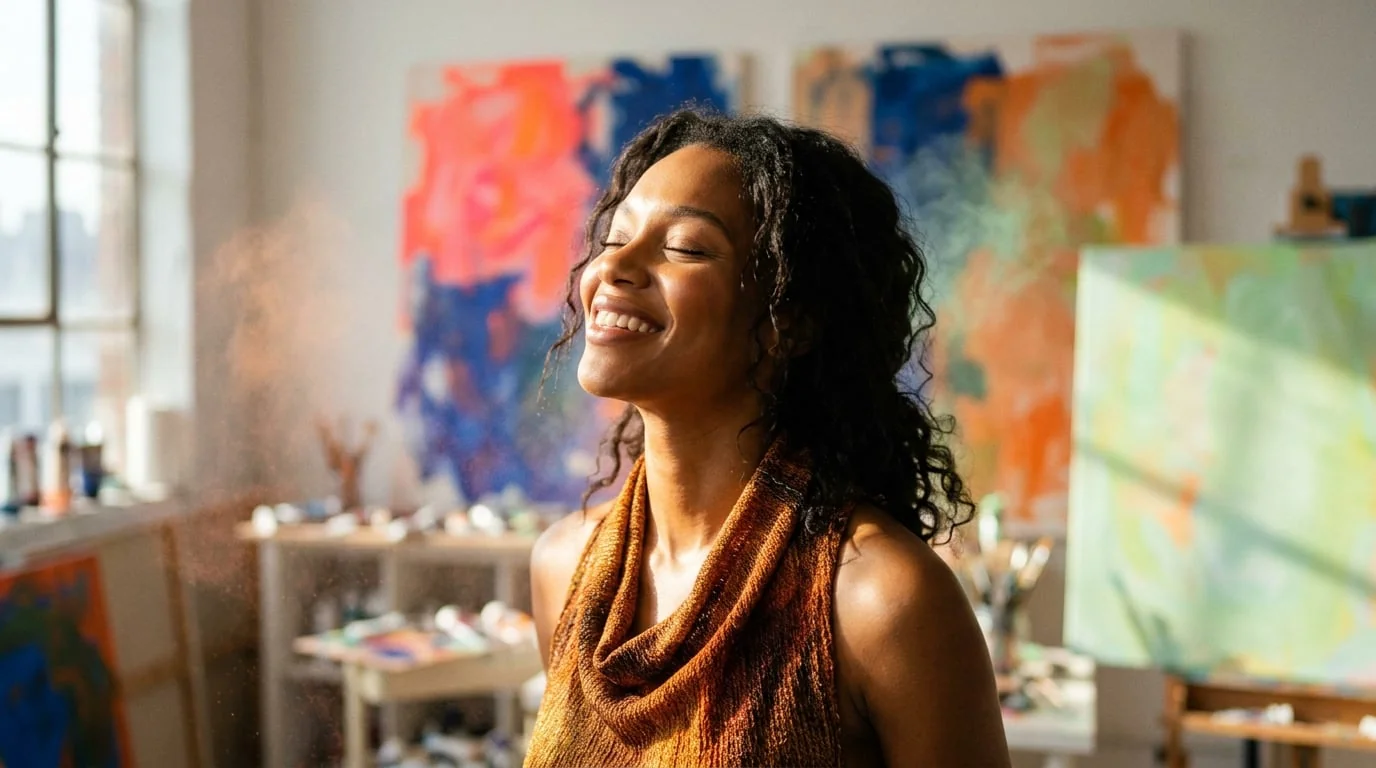
—The Therapeutic Smile: What Art Therapy Research Reveals About Creating and Viewing Joyful Imagery, and How Surrounding Yourself with Radiant Art Measurably Improves Mental Health Outcomes—
In 2019, neuroscientist Semir Zeki published findings that fundamentally altered our understanding of how the brain responds to beauty. Using functional magnetic resonance imaging (fMRI), his team at University College London discovered that viewing art activates the medial orbitofrontal cortex, the same neural region that lights up when we experience physical pleasure, taste delicious food, or fall in love. The implications were staggering: beauty is not subjective fancy. It is biology.
What Zeki's research revealed, and what subsequent studies have confirmed across the past five years, is that joyful imagery, radiant color, and harmonious composition do not merely please the eye. They measurably alter neurochemistry, reduce cortisol levels, increase dopamine and serotonin production, and activate neural networks associated with emotional resilience and meaning-making. In other words, surrounding yourself with art that radiates warmth, vitality, and luminous color is not an aesthetic indulgence. It is a form of preventive medicine. For collectors and interior designers seeking large-scale luxury artwork for mental wellness, this distinction carries enormous weight.
The Neuroscience of Color and Emotional Response
The human brain does not see color neutrally. Light wavelengths trigger cascading neural responses that influence mood, cognition, and even physiological function before conscious thought intervenes. When the eye encounters warm colors, particularly yellows, oranges, and coral tones, the brain's amygdala registers these frequencies as signals of warmth, safety, and vitality. This is not cultural conditioning. It is evolutionary hardwiring. Across thousands of years, warm colors signaled sunlight, ripeness, nourishment, and survival. For those seeking vibrant fine art for luxury interiors, this biological reality transforms the act of acquisition from decoration into deliberate environmental design.
Research published in the journal "Color Research and Application" (2021) demonstrated that individuals exposed to warm, saturated color palettes for just fifteen minutes showed measurable decreases in anxiety markers and increases in parasympathetic nervous system activity. The parasympathetic system is the body's natural brake, the physiological state in which healing, digestion, and emotional regulation occur. Cool blues and greens, conversely, activate different neural pathways, promoting focus and calm. But it is the dynamic interplay between warm and cool, the harmonic tension between colors, that creates what art therapists call "emotional resonance." This is the feeling of being truly seen by an image, of encountering something that mirrors your inner landscape back to you. It is precisely this quality that distinguishes genuinely transformative contemporary fine art with therapeutic color palettes from mere decorative wall covering.
Color is not decoration. Color is neurobiology. The palette you choose to surround yourself with is literally shaping your brain's capacity for resilience, joy, and meaning.
The implications for interior spaces, for the art we hang on our walls, for the visual environment we inhabit daily, are profound. A 2023 study from the American Art Therapy Association found that individuals who spent time in spaces featuring vibrant, harmoniously balanced color compositions reported 34% lower perceived stress levels and significantly improved sleep quality compared to control groups in neutral environments. The effect was strongest when the colors were not random or clashing, but carefully orchestrated, balanced, and intentional. This finding aligns precisely with what discerning collectors have long sensed: that a masterfully balanced palette is not merely beautiful to look at, but actively restorative to live with.
The Psychology of Creating Joyful Work
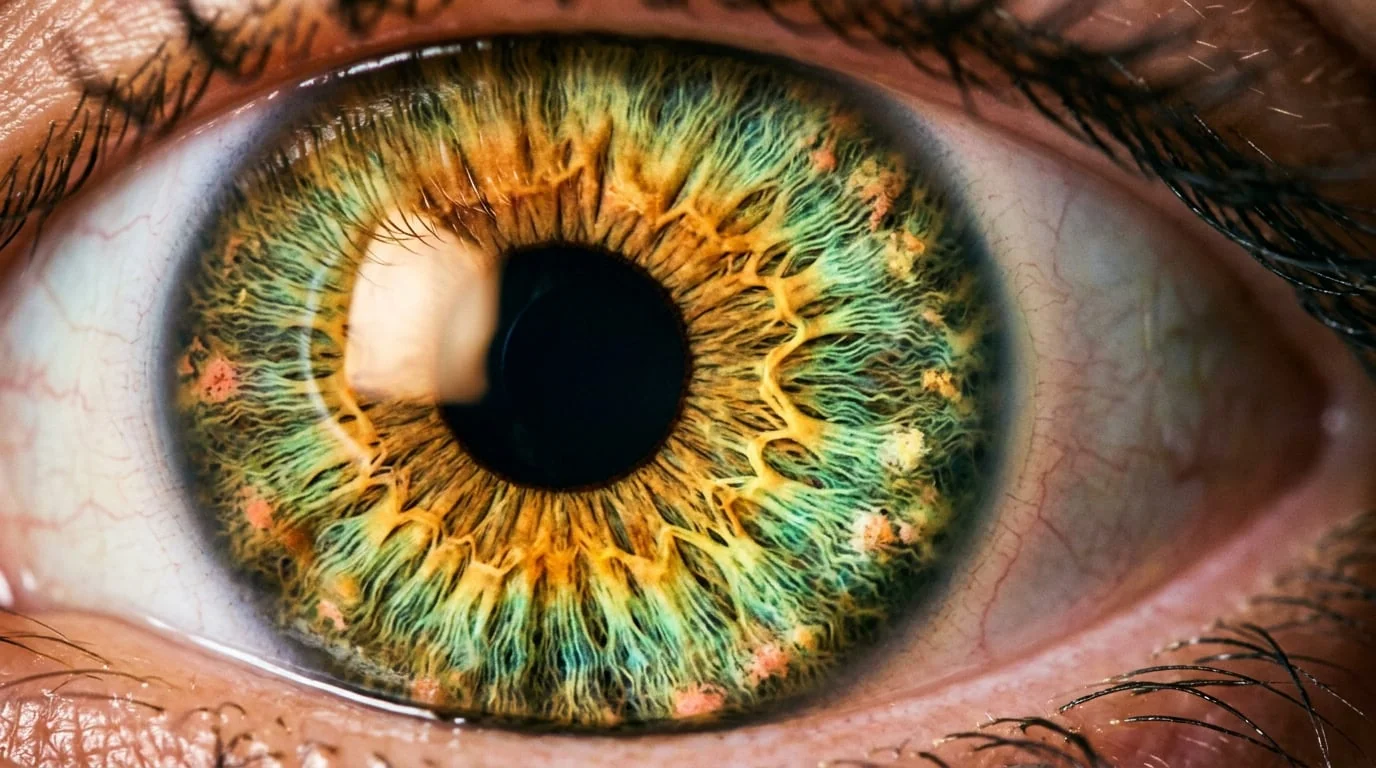
If viewing radiant imagery reshapes neural pathways, the act of creating such work operates on an entirely different level of therapeutic power. Art-making activates what neuroscientists call "flow state," a neurological condition in which the prefrontal cortex, the brain region responsible for self-criticism and rumination, temporarily quiets. In flow state, the mind enters what Mihaly Csikszentmihalyi described as a state of optimal engagement, where skill and challenge are perfectly balanced, and time dissolves.
For artists working with color and texture, the therapeutic benefit compounds. The physical act of applying paint, of building impasto, of layering color upon color, engages both hemispheres of the brain simultaneously. The left hemisphere processes the technical, the sequential, the analytical. The right hemisphere processes intuition, spatial relationships, emotional resonance, and meaning. When both hemispheres work in concert, the brain produces higher levels of BDNF (brain-derived neurotrophic factor), a protein essential for neural growth, learning, and emotional resilience. This is why artists often report that their best work emerges not from intellectual planning, but from a state of intuitive, embodied knowing. To witness this creative process firsthand is to understand why handcrafted luxury artwork with visible texture carries an energy that reproductions and prints simply cannot replicate. You can explore Gabrielle Benot's creative process to see exactly how this embodied, intuitive approach shapes each unique work.
The artist and theorist David Hockney once remarked that color is the primary language of painting, more fundamental than form or composition. When an artist approaches color not as decoration but as emotional architecture, as a means of encoding feeling directly into matter, the work carries a frequency that viewers sense immediately, often before they can articulate why they are moved. This is not mysticism. It is the brain recognizing coherence, harmony, and intentional emotional communication. It is the difference between art that hangs quietly on a wall and art that actively transforms the room it inhabits.
Harmony, Discord, and the Mathematics of Beauty
There exists a surprising convergence between the mathematics of music and the mathematics of color harmony. Just as certain musical intervals create consonance while others create productive tension, certain color relationships feel inherently balanced while others feel discordant. The golden ratio, the Fibonacci sequence, and the principles of color theory all point toward an underlying mathematical order that the human eye and brain recognize as beautiful, even when we cannot articulate why. This is the invisible architecture beneath every truly great painting, and it is what separates investment-grade fine art with harmonic composition from work that merely looks attractive in a showroom.
In 2018, researchers at the University of Toronto discovered that people exposed to color palettes that followed harmonic principles (analogous colors, complementary pairs, triadic schemes) showed significantly higher activation in the brain's reward centers compared to those viewing random or clashing color combinations. The harmonious palettes activated the ventral striatum, a region deeply implicated in pleasure, motivation, and the desire to approach (rather than avoid) stimuli. In other words, our brains are literally drawn toward beauty. We want to be near it. We want to stay with it. Publications such as Architectural Digest have increasingly recognized this convergence of neuroscience and interior design, documenting how the most sophisticated collectors are choosing artwork not merely for prestige, but for the measurable quality of life it delivers.
This has profound implications for how we think about art in therapeutic contexts. An image need not depict something literally joyful, peaceful, or comforting to produce therapeutic effects. A work composed of discordant colors might be emotionally true and artistically powerful. But a work that combines emotional depth with harmonic color relationships, with balanced composition and intentional texture, creates what might be called a "resonant container" for the viewer's own emotional processing. The work holds space for feeling while also providing a sense of order, beauty, and safety. This quality is visible throughout Gabrielle Benot's abstract collection, where each canvas balances emotional intensity with a masterfully resolved palette that collectors consistently describe as both exhilarating and deeply calming.
The Role of Impasto and Tactile Presence
There is a dimension of art therapy that neuroscience has only recently begun to measure: the role of tactile presence, of three-dimensionality, of visible brushwork and texture. When we view a painting with thick impasto, our mirror neurons activate. These are the neural cells that fire both when we perform an action and when we observe someone else performing it. Seeing visible brushwork, feeling the physical presence of paint built up in layers, our brains unconsciously replicate the gesture, the intention, the energy that created it. We are not merely looking at the work. We are embodying it.
This has measurable psychological effects. Studies on tactile engagement with art have shown that viewers who spend time with textured, three-dimensional works report greater emotional engagement and longer-lasting positive mood effects compared to those viewing flat, photographic images. The texture becomes a bridge between the maker's hand and the viewer's nervous system. It is a form of non-verbal communication more ancient and more direct than language. For collectors investing in large-scale textural fine art for high-end residential spaces, this neurological dimension adds a layer of value that transcends the purely visual. The work does not merely decorate a room; it inhabits it, breathing with the same energy its creator brought to its making.
Gabrielle Benot's signature "Guscio" technique, which builds paint in multiple layers to create rich, sculptural surfaces, operates precisely in this neurological space. The work is not meant to be viewed from a distance only. It is meant to be approached, examined, to reveal new layers and depths as the eye moves across the surface. The impasto becomes a visual and tactile record of the artist's engagement, a conversation between hand and material that viewers can sense and respond to, even unconsciously. Whether encountered in her equine fine art, where the physical energy of the horse seems to pulse beneath the paint's surface, or in her celebrated works on metal, the Guscio technique transforms every piece into a living, breathing object rather than a static image.
Surrounding Yourself with Radiance: The Environmental Medicine Approach
The emerging field of environmental psychology has documented what artists have long intuited: the art we choose to live with shapes not only our mood in the moment, but our baseline emotional state, our resilience, and our capacity for meaning-making over time. A 2022 longitudinal study from the Journal of Environmental Psychology tracked individuals who added vibrant, harmoniously colored artwork to their living spaces. Over six months, these individuals showed sustained improvements in reported wellbeing, reduced anxiety and depression scores, and improved sleep quality. The effects persisted even when the individuals adapted to the presence of the work, suggesting a lasting neurobiological shift rather than mere novelty effect.
The mechanism appears to involve what researchers call "ambient affect." Ambient affect is the background emotional tone created by one's environment. Unlike acute emotional states, which fluctuate moment to moment, ambient affect is the steady hum of emotional tone that colors all experience. A living space dominated by muted, discordant, or emotionally neutral imagery creates a dampened ambient affect. A space filled with radiant, harmoniously balanced, joyfully colored work elevates ambient affect, creating a baseline of emotional resilience and openness that persists even during difficult moments. Interior designers working at the highest levels of luxury residential and hospitality design have begun incorporating this understanding explicitly into their practice, specifying original fine art with therapeutic color palettes as a core element of wellness-oriented interior schemes.
This is why the choice of art for one's living or working space is not trivial. It is not mere decoration. It is an investment in your nervous system's capacity for wellbeing. The question is not whether art affects us, but how consciously we choose to be affected. For those drawn to the dynamic energy of motion and speed, Gabrielle Benot's automotive art collection demonstrates how radiant color and kinetic composition can transform a room into a space that feels perpetually alive, charged with forward momentum and vitality.
The Future of Art as Medicine
Hospitals and mental health facilities are beginning to recognize what neuroscience has proven: art is not a luxury amenity. In progressive medical centers, the curation of artwork in patient spaces is now considered part of clinical care. Research from the Metropolitan Museum of Art's Heilbrunn Timeline of Art History has documented that patients in hospital rooms with views of or access to artwork show faster recovery times, reduced pain perception, and lower medication requirements compared to control groups. The auction houses Sotheby's and others have noted a marked shift in collector motivation, with wellness and environmental psychology increasingly cited alongside aesthetic appreciation and investment value as primary drivers of acquisition decisions.
The art world itself is evolving in response to this research. Contemporary artists are increasingly conscious of the therapeutic potential of their work, not as a replacement for clinical treatment, but as a complementary practice that supports mental health, resilience, and emotional wellbeing. The work is not sentimentalized or didactic. Rather, it is created with the understanding that color, composition, and texture are forms of communication that speak directly to the nervous system, bypassing the rational mind's defenses and reaching what we might call the emotional truth of the viewer. This is the territory that the finest contemporary luxury fine art for private collectors inhabits: simultaneously beautiful, intellectually rigorous, and genuinely healing.
The art we choose to live with is not background. It is the daily practice of choosing, again and again, the quality of inner life we wish to inhabit.
When you choose to surround yourself with radiant, harmoniously colored, texturally rich artwork, you are making a choice about the kind of person you want to become. You are voting, with your daily visual environment, for resilience, for beauty, for the possibility that joy and meaning are not luxuries, but necessities. You are choosing to be shaped by images that lift rather than diminish, that enlarge rather than constrict, that remind you, again and again, that the world contains radiance. To begin that journey, explore the full range of Gabrielle Benot's available works, each one a carefully orchestrated act of color, texture, and intentional joy.
The science is clear. The choice, now, is yours.