Explore why original fine art remains irreplaceable in the age of AI. A sophisticated editorial on human emotion, cultural memory, and the living authenticity that only a human hand can create.
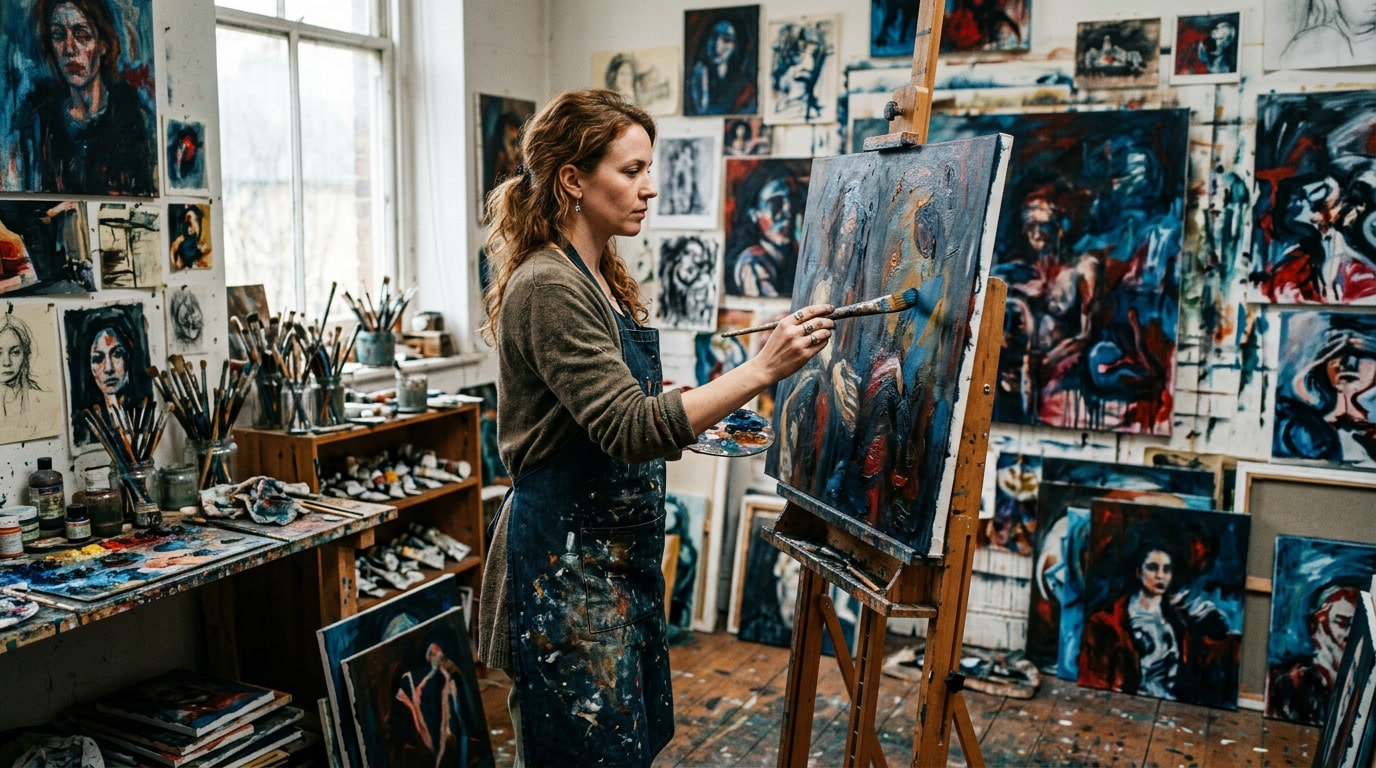
In an era when artificial intelligence can generate a thousand images in seconds, the question is no longer whether machines can make pictures. The question is whether they can bleed for them. The most sophisticated image-generation models in the world are trained on the accumulated visual output of human civilization, and yet they remain, at their core, elaborate mirrors. They reflect. They recombine. They optimize for aesthetic approval. What they cannot do is remember a specific grief, carry the weight of a particular afternoon, or make a mark that costs something. That cost, that irreducible human expenditure, is precisely what original art is made of.
The Archive That Only You Possess
Every artist working with genuine intention is drawing from an archive that cannot be scraped, indexed, or replicated. It is not a database of images. It is a lifetime of sensory experience, cultural inheritance, personal loss, and embodied knowledge. When Joan Mitchell painted her explosive abstract fields in Vétheuil, France, she was not illustrating a feeling. She was enacting one, pulling from a specific relationship with landscape, memory, and color that existed nowhere else on earth. The resulting works carry a signature that goes far deeper than style. It is the signature of a consciousness that suffered and celebrated and ultimately chose to mark a surface in one particular way and no other.
This is what philosophers of art have long called indexicality, the idea that a work of art is not merely a representation but a physical trace of a human presence. A brushstroke is an index of a body in motion, a decision made under pressure, a moment of doubt followed by commitment. No generative model produces indexical marks. It produces statistically probable arrangements of pixels, however beautiful those arrangements may be.
"A machine can learn every brushstroke Rembrandt ever made. It cannot learn what it cost him to make them."
Emotional Scar Tissue as Artistic Material
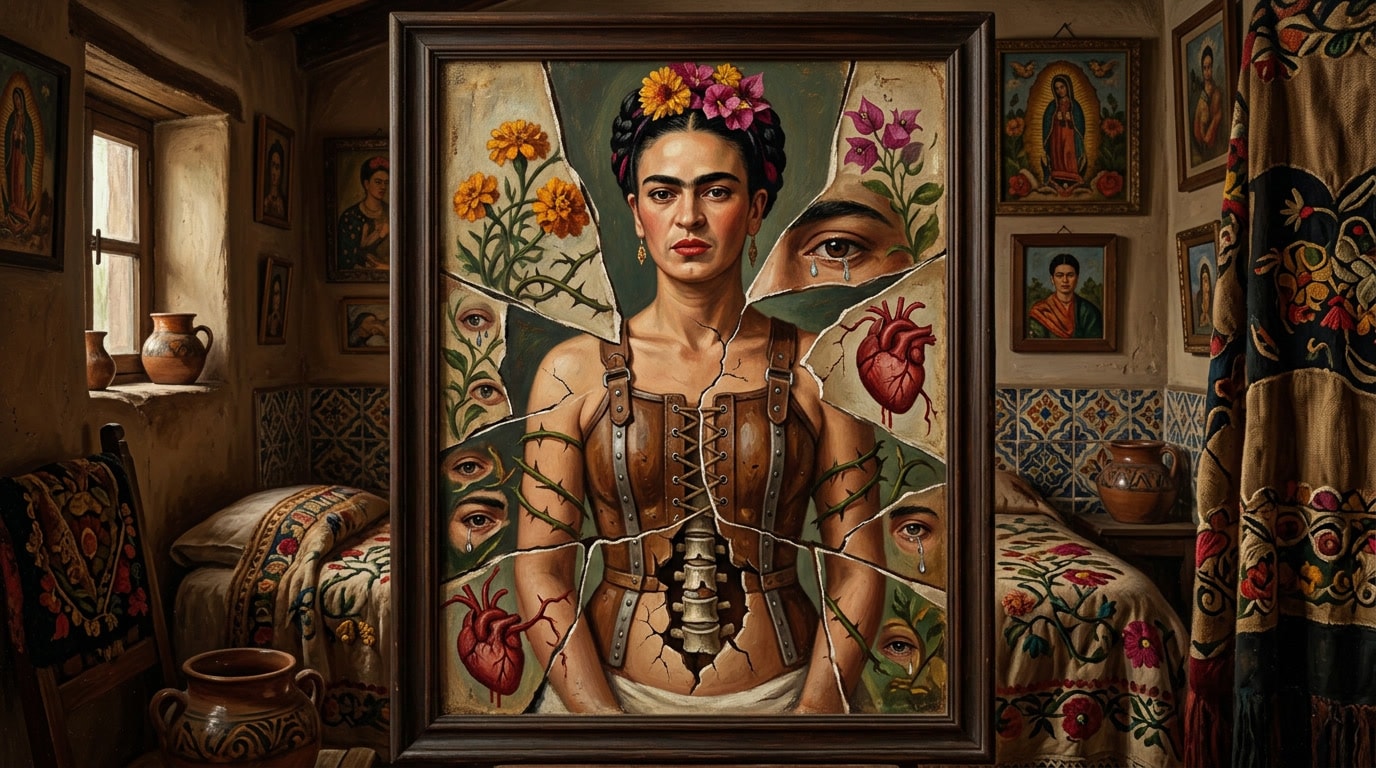
The psychologist and Holocaust survivor Viktor Frankl wrote that suffering, when it cannot be avoided, becomes the raw material through which meaning is made. The greatest works of art in human history confirm this. Frida Kahlo's self-portraits were not exercises in technical skill. They were the visual autobiography of a body in chronic pain and a psyche navigating impossible contradictions. The power of those works is inseparable from the reality that Kahlo actually lived them. The canvas was a site of genuine reckoning, not aesthetic production.
This is what collectors and serious art buyers recognize, often intuitively, when they stand before a work of original fine art. They are not simply purchasing a beautiful object. They are entering into a relationship with the residue of another human consciousness. The texture of the paint, the evidence of revision, the places where the artist pushed through uncertainty, all of it communicates at a frequency that reproductions and AI-generated imagery simply cannot access. The Museum of Modern Art has long championed this distinction, building entire curatorial philosophies around the irreplaceable presence of the original object.
Cultural Memory and the Untransferable Inheritance
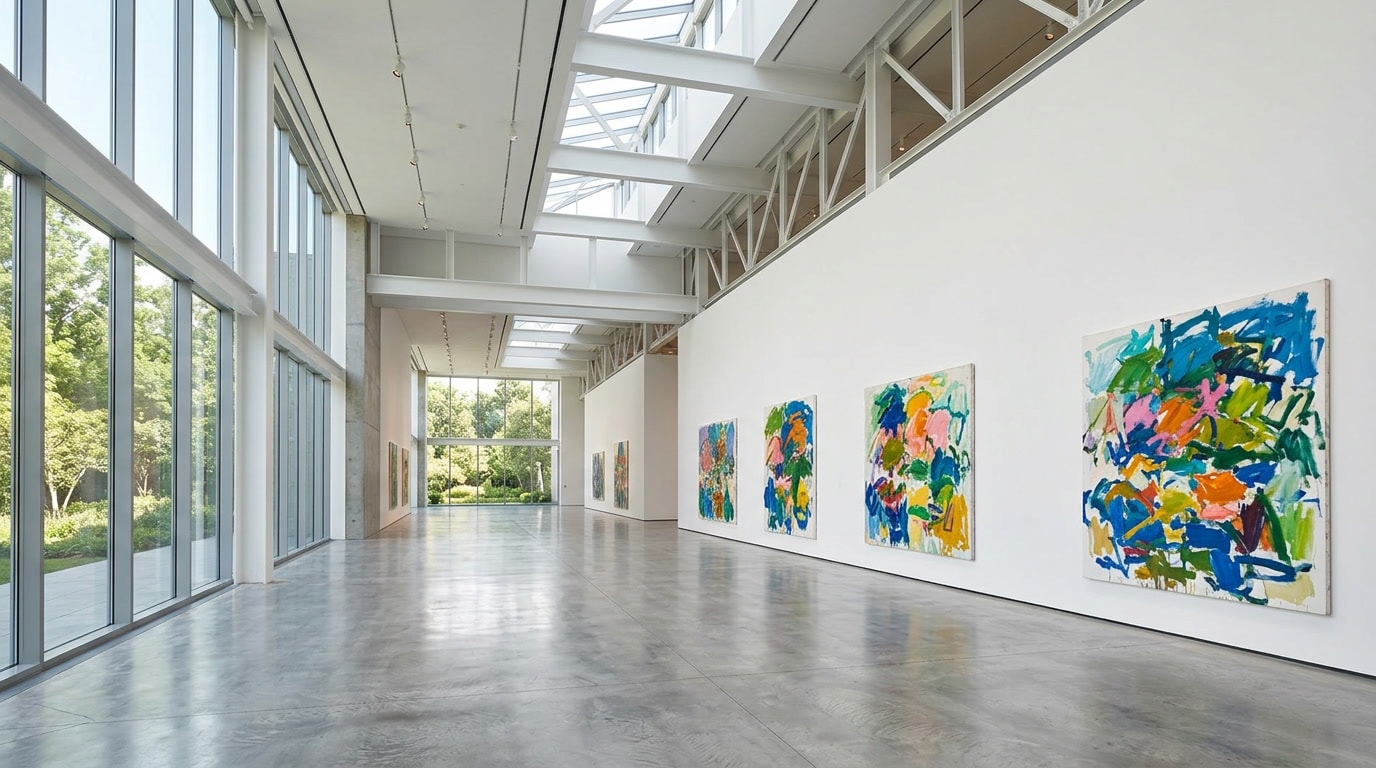
An artist does not arrive at their work from nowhere. They arrive carrying the full weight of their cultural inheritance: the colors of a particular childhood, the visual language of a specific place, the aesthetic values absorbed across generations. This inheritance is not data. It is lived, embodied, and deeply personal. When a California artist paints with a palette shaped by Pacific light and the saturated warmth of the American West, that chromatic sensibility is the product of thousands of hours of lived visual experience that no training set can authentically reproduce.
The art historian T.J. Clark argued that great painting is always, at some level, a negotiation with the world as the artist actually found it. That negotiation requires a self that has genuinely encountered the world, been changed by it, and developed a specific, hard-won point of view in response. Cultural memory functions as both constraint and creative fuel. It gives the artist something to push against, something to honor, and something to transform. The resulting work carries that entire negotiation within it, compressed into color, form, and texture.
Texture, Presence, and the Object That Resists Reproduction
There is a final, entirely physical dimension to original art that digital generation cannot approach. Impasto painting, works built up in thick, sculptural layers of paint, exists in three dimensions. It casts shadows. It changes under shifting light. It has a topography that rewards close looking and rewards it differently depending on the time of day, the angle of the viewer, and the quality of the light source. This is not a stylistic choice. It is an ontological condition. The work is an object in the world, not a representation of one.
The abstract works in Gabrielle Benot's collection operate precisely in this register. Built using her signature Guscio technique, each piece is a physical accumulation of decisions, a topographic record of a human process unfolding in real time. The color harmonies that collectors consistently remark upon are not generated. They are discovered, through intuition, experience, and the kind of chromatic intelligence that only develops over years of genuine practice. In a world increasingly saturated with algorithmically produced imagery, that distinction has never been more significant, or more valuable.
The conversation about artificial intelligence and creativity will continue to evolve, and it should. But the irreducible core of original fine art, the fact that it is made by a specific person, from a specific life, at a specific cost, remains untouched by that conversation. It is, in the deepest sense, the one thing that cannot be optimized away.