What is art, really? Explore a radical philosophical inquiry through quantum physics, anthropology, and the Guscio technique by Gabrielle Benot.
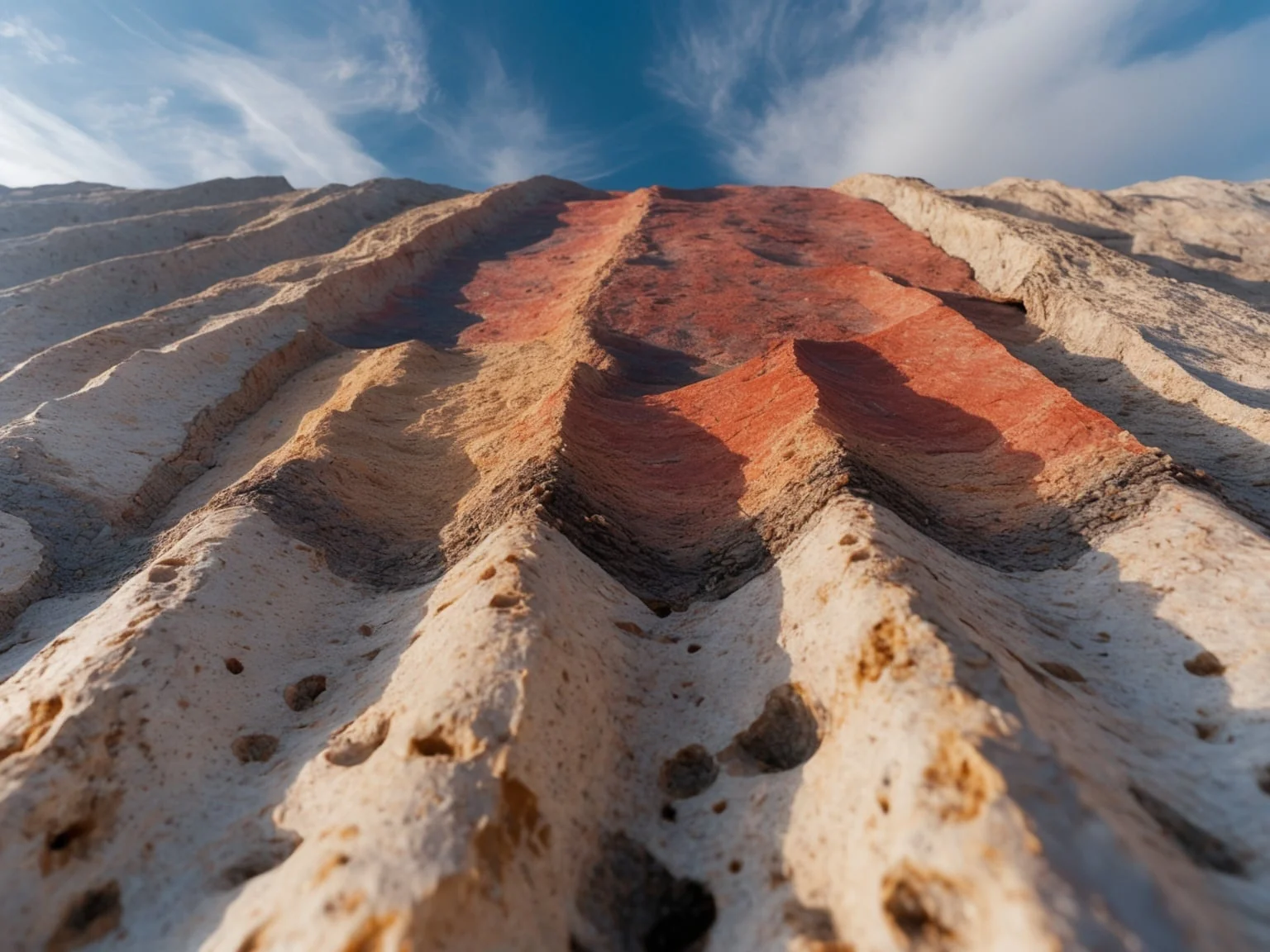
The Question That Never Gets Old
Every civilization that has ever existed made art before it made written law. Before contracts, before currency, before organized religion in any recognizable form, human beings were pressing pigment into stone and leaving their mark. That fact alone should stop us cold. Art is not a luxury. It is, apparently, a biological imperative as fundamental as language itself, as shelter, as the need to be understood by another living being.
Yet the question persists, sharper and more urgent than ever in an age of AI-generated imagery and algorithmic aesthetics: What is art, really? Not what it looks like. Not what it sells for at Christie's. But what it fundamentally is, at the level of physics, anthropology, neuroscience, and lived human experience. The answer, it turns out, is more radical and more beautiful than most of us have been taught to expect.
The Quantum Argument: Matter That Remembers
Quantum physics offers a genuinely radical lens. At the subatomic level, particles do not exist in fixed states until they are observed. They exist in superposition, holding multiple possibilities simultaneously, collapsing into a single reality only at the moment of perception. Sound familiar?
A painting before it is seen is, in a very real philosophical sense, unfinished. It holds latent meaning, emotional charge, and narrative potential that only crystallizes when a human consciousness engages with it. The viewer is not passive. The viewer is, in the quantum sense, completing the work. This is not metaphor. This is the architecture of reality as contemporary physics understands it, and it places the act of looking at art among the most consequential things a human being can do.
"Art is not what you see, but what you make others see." Edgar Degas understood this long before quantum mechanics had a name for it.
This is precisely why Marcel Duchamp's placement of a urinal in a gallery in 1917 was not a joke. It was a philosophical experiment about observation, context, and the act of designation. If the observer completes the artwork, then the artist's primary act is one of framing, not just making. The artist does not deliver a finished object. The artist constructs a field of possibility and invites another consciousness to step into it. Every great work of art is, at its core, an act of radical hospitality.
The Anthropological View: Art as Survival Technology
Cultural anthropologists have long argued that art functions as a form of social technology. The Metropolitan Museum of Art holds artifacts spanning over five thousand years, and across every culture represented, art consistently serves the same core functions: it encodes memory, transmits values, marks sacred thresholds, and binds communities together. Strip away the gilded frames and the auction estimates, and what remains is something closer to infrastructure than decoration.
The Lascaux cave paintings, dated to approximately 17,000 BCE, were not decorative. Researchers now believe they functioned as astronomical maps and seasonal hunting calendars. The artists were scientists. The paintings were data, rendered in ochre and charcoal because that was the most durable medium available. These were not hobbyists filling leisure hours. They were specialists encoding critical survival knowledge in the only format that could outlast a human lifetime.
Art, then, is also information made visceral. It is knowledge that bypasses language and lands directly in the body. Neuroscientists studying aesthetic response have documented that viewing emotionally resonant art activates the same neural pathways as physical touch, as music, as the recognition of a beloved face. The body does not distinguish between experiencing beauty and being held. That is not a small thing. That is everything.
Texture as Philosophy: The Guscio Principle
Which brings us to the most radical question of all: if art is completed by the observer, and if it functions as embodied knowledge, then what happens when the physical surface of the artwork itself becomes the primary carrier of meaning? What happens when the material is not simply a vehicle for an image, but is itself the message?
Mark Rothko understood color as emotional field. Joan Mitchell understood gesture as autobiography. But texture, genuine topographic relief built up in layers of material, introduces something neither of them fully explored: the dimension of touch as conceptual language. A surface that has physical depth does not merely represent an experience. It is an experience, one that changes with the angle of light, the time of day, and the position of the viewer's body in space.
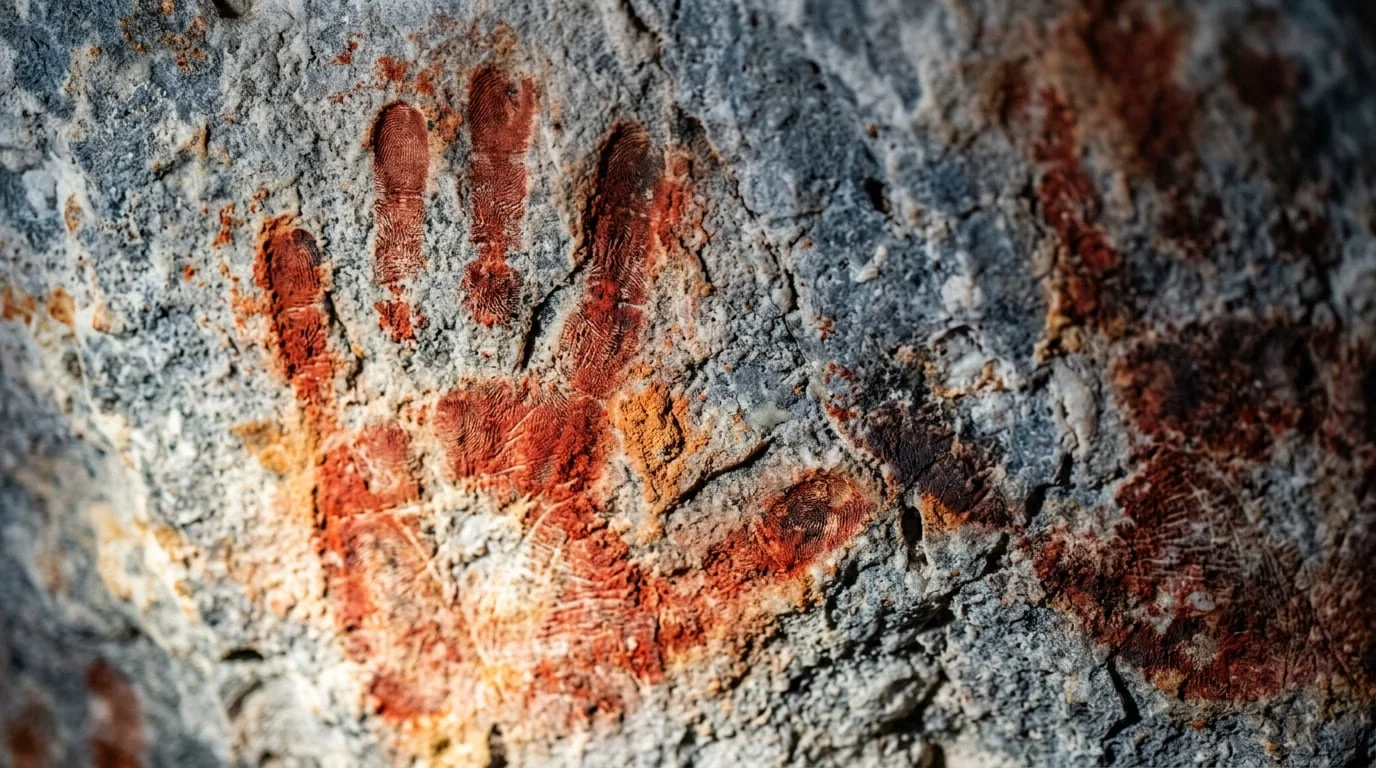
The Guscio technique, with its deeply sculptural, shell-like surface architecture built directly onto metal substrates, operates on exactly this principle. The name itself, drawn from the Italian word for shell, speaks to something ancient and organic: the idea that a protective outer form can simultaneously be a thing of extraordinary beauty. The work is not flat. It does not ask to be looked at from a safe distance. It asks to be read, the way one reads Braille, with the full sensory intelligence of the body. The light that falls across a Guscio surface changes hour by hour, meaning the artwork is never the same twice. It exists, like a quantum particle, in perpetual becoming.
Equally central to this philosophy is the role of color. Where texture creates topography, color creates atmosphere, and in Gabrielle Benot's work, the two are inseparable. The palettes are not chosen arbitrarily. They are orchestrated with the same precision a composer brings to harmony, balancing warmth against cool, saturation against restraint, so that the eye moves through the surface the way the body moves through a room it loves. Collectors and interior designers working on high-end residential and commercial spaces consistently remark that the color relationships in these works do something rare: they make the surrounding space feel more intentional, more alive. You can explore this philosophy in motion across the abstract collections, where each piece demonstrates how material depth and masterful color together transform a wall into a living, breathing presence.
This is why large-scale textural work on metal resonates so powerfully in architecturally significant spaces. The surface holds light differently than canvas. It interacts with its environment rather than simply hanging within it. Publications like Architectural Digest have long documented how the most compelling luxury interiors treat art not as decoration but as a structural element of the room's emotional identity. A Guscio piece on metal does exactly that: it does not fill a wall so much as it activates it, turning passive square footage into a focal point that anchors the entire spatial experience.

For collectors interested in how this technique translates across subject matter, the equine fine art collection offers a compelling study in how Guscio's textural language can render movement, musculature, and emotional presence with extraordinary depth. Similarly, the automotive art collection demonstrates how the same principles, applied to the aerodynamic forms of iconic vehicles, produce works of visceral kinetic energy that resonate deeply with discerning collectors who appreciate both mechanical precision and painterly mastery.
The Artist's Role: Architect of Possibility
If the viewer completes the work, then the artist is not a producer of objects. The artist is an architect of possibility, someone who arranges matter, color, and surface in such a way that meaning becomes inevitable. This is a profoundly different understanding of creative labor than the romantic myth of inspiration, and it is far more demanding. It requires the artist to think not only about what they are making, but about what the work will do to a body standing in front of it, in a room, in a particular quality of light, on an ordinary Tuesday afternoon twenty years from now.
This long-view thinking is embedded in every decision that goes into a Guscio work: the choice of metal over canvas, the layering of material to create specific light-catching topographies, the orchestration of color to produce a particular emotional frequency. To understand the full depth of this process, the artist's process page offers a rare and illuminating window into how intention, material, and philosophy converge in the studio.
So, What Is Art?
Art is the only human technology that simultaneously asks a question and is the answer. It is matter organized with intention, activated by perception, and completed by feeling. It is the oldest form of communication we have, predating every written language, every legal system, every institution humanity has ever built, and it has never once required a translation. It speaks directly to the part of us that existed before we had words, and it will continue speaking long after any particular word has lost its meaning.
To live with great art is not a luxury in the decorative sense. It is a luxury in the original sense: an abundance of meaning, a daily encounter with something that insists on being more than functional, more than efficient, more than ordinary. It is, perhaps, the most sophisticated thing a human being can choose to surround themselves with.
Frequently Asked Questions
- What is the Guscio technique? Guscio is a proprietary textural method that builds deeply layered, sculptural relief directly onto metal substrates, creating surfaces that shift with light and invite tactile engagement. The name derives from the Italian word for shell, reflecting the organic, architectural quality of the finished surface.
- What is textural art? Textural art prioritizes physical surface depth as a primary aesthetic and conceptual element, moving beyond flat imagery into three-dimensional material experience. In the context of luxury large-scale fine art, textural work on metal represents one of the most sophisticated and spatially commanding expressions of this approach.
- Why does art matter philosophically? Across quantum physics, anthropology, and neuroscience, art consistently emerges as a fundamental mechanism for encoding meaning, building empathy, and completing human perception. It is not a supplement to human experience; it is one of its core operating systems.
- What size art works best for large spaces? For architecturally significant rooms, large-scale works above 48 inches command the wall and create dialogue with the space rather than simply filling it. Works on metal are particularly effective in high-ceiling, open-plan environments where the reflective quality of the substrate amplifies the room's natural and artificial light.
- Where can I view or acquire original works? The full collection of available original works, including large-scale abstracts, equine fine art, and automotive pieces, can be explored at the online shop. Studio inquiries and commissions are welcomed for collectors seeking site-specific works.